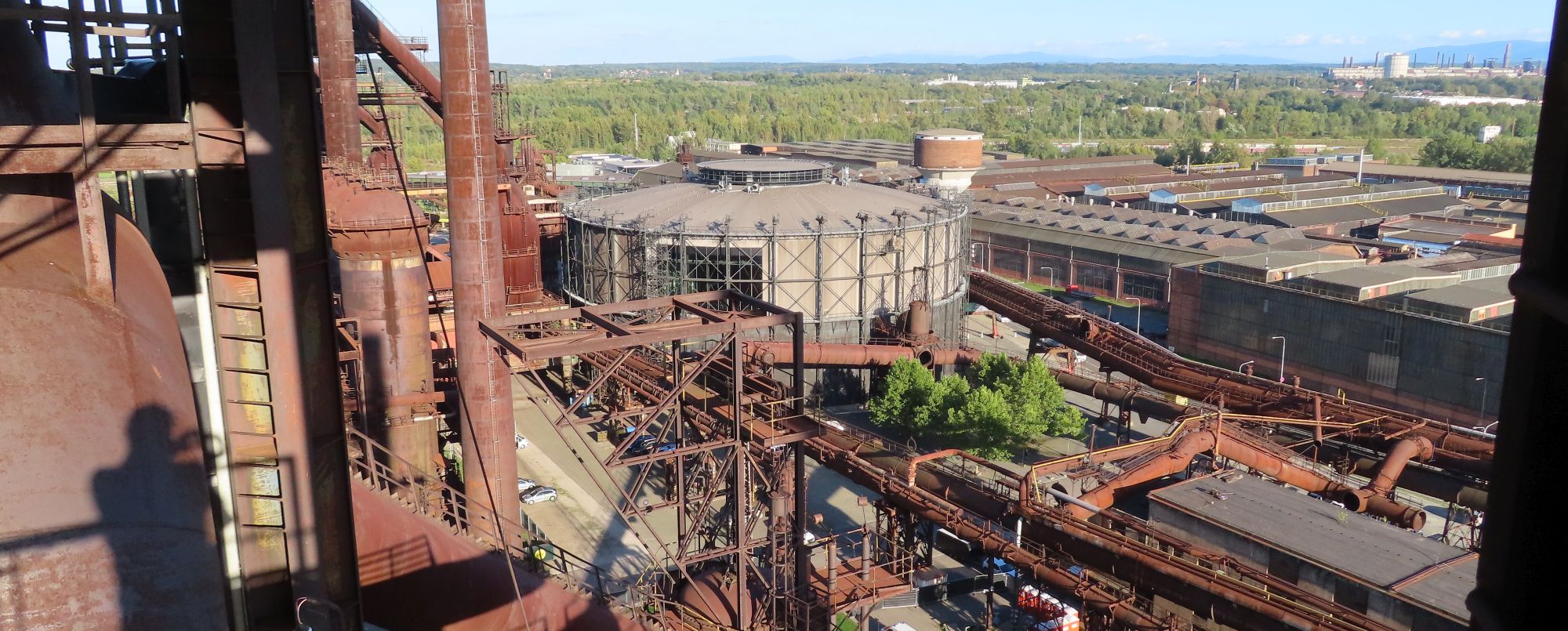
A Gem Within a Gem
Many tourism resources describe Olomouc, the principal city of Central Moravia, as a “hidden gem”. Having visited the city several times, I must disagree with that assessment.
Olomouc is easy to reach by rail or road, and the city does an excellent job of promoting its attractions to prospective visitors. There is certainly enough to see and do to fill an enjoyable weekend.
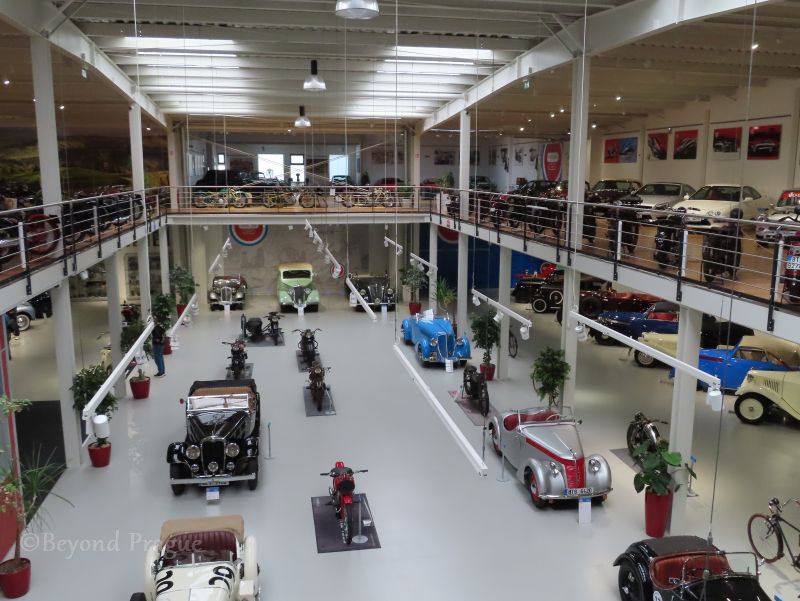
That said, Olomouc does have a few hidden gems of its own for visitors to discover. Among them is Veteran Arena, an automotive museum housing a collection of more than 100 vintage cars and motorcycles dating from the 1920s onward.
Why do I consider Veteran Arena a hidden gem? Located east of the main railway station rather than west of it, where the historic centre and most major attractions are found, the museum lies outside the city’s usual tourist routes. It is also tucked away and not visible from the main roads. Despite this, it is easy to reach and should not be missed by anyone with an interest in vintage vehicles.
Let’s take a closer look at Veteran Arena:
Pragas, and Škodas, and Tatras—Oh my!
When Czech cars are mentioned, the first name that comes to mind for most people is Škoda Auto. Praga and Tatra may also be familiar. These are among the world’s oldest automotive manufacturers and are well known beyond Czech borders.
Veteran Arena features several representatives of these three great Czech marques, along with vehicles from domestic manufacturers that may be less familiar to international visitors.
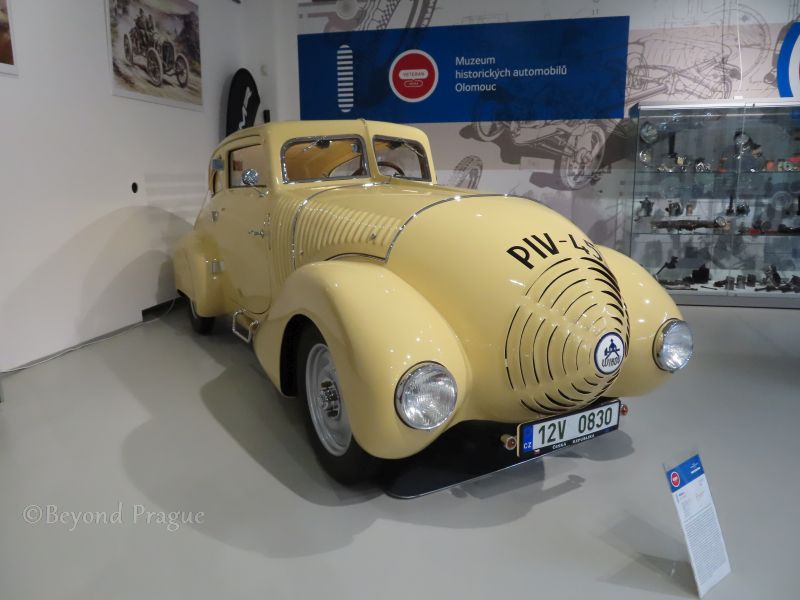
One such company is Wikov, which produced cars in the nearby city of Prostějov between 1924 and 1940. Wikov specialized in small production runs of luxury automobiles, making its surviving vehicles both rare and highly sought after by collectors.
A particularly eye-catching exhibit is the Wikov 35 Kapka from the early 1930s. “Kapka” means “drop”, and the car was the first Czechoslovak automobile designed with aerodynamics as a central consideration. It was not a commercial success, and only about 150 examples were produced over a three-year period.
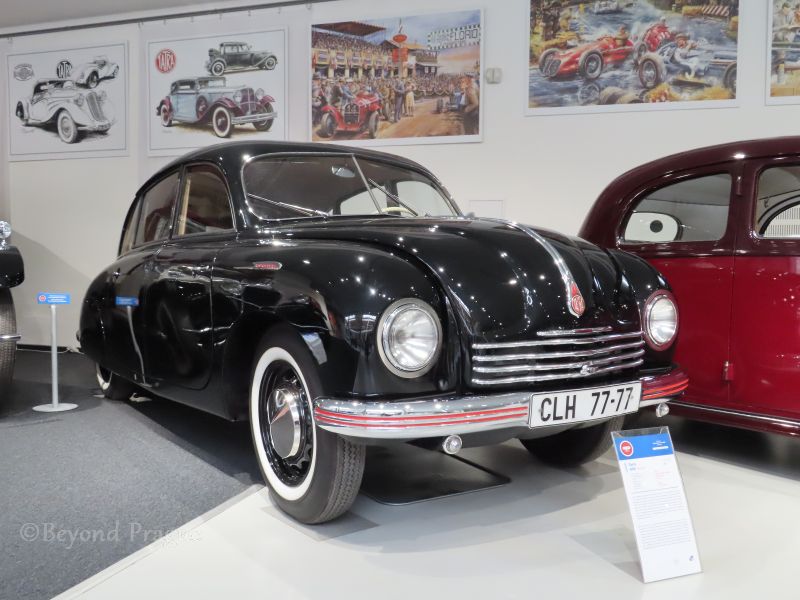
Staying with the theme of aerodynamics, Tatra became famous for a remarkable series of streamlined cars that began with the V570 prototypes in 1931. Veteran Arena includes a Tatra 600 Tatraplan from 1951, one of the finest examples of the company’s post-war design philosophy. The model was produced from 1948 to 1952 and represents the mature expression of Tatra’s early aerodynamic design philosophy.
The museum also displays vehicles from lesser-known Czech manufacturers such as ČZ, Jawa, and Zbrojovka Brno. If you recognize the names ČZ and Jawa, it is likely through their motorcycles rather than their automobiles. Zbrojovka Brno was best known as a firearms manufacturer, though it also produced cars between 1924 and 1936.
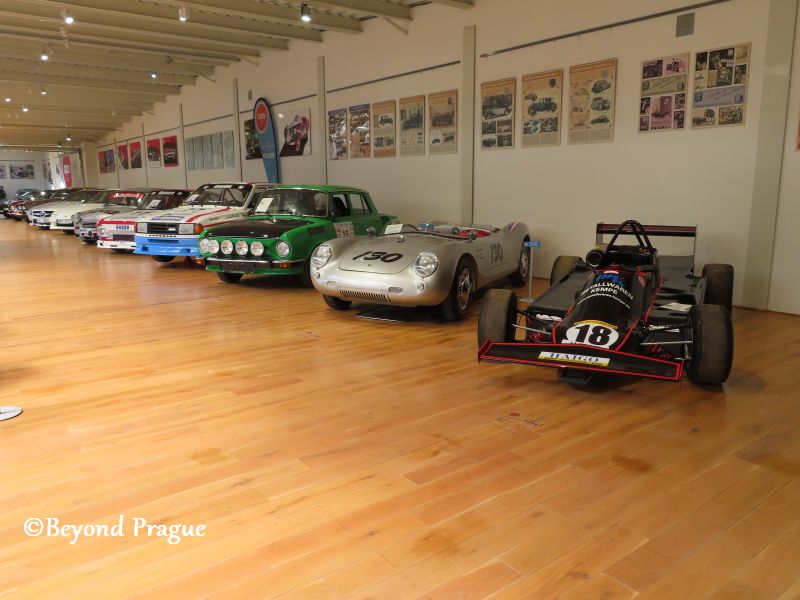
In addition to vintage road cars, Veteran Arena also displays vehicles associated with motorsport. This is entirely fitting, as Czech manufacturers have a long and distinguished history in a wide range of racing disciplines.
Škoda has represented the country with distinction for generations, particularly in the World Rally Championship.
MTX has also been active in many forms of competition, including open-wheel racing.
On the second floor, a line of rally and racing cars includes the legendary Škoda 130 RS. During its competitive peak from 1975 to 1982, it earned the nickname “Porsche of the East” for its exceptional performance, agility, and handling. Today, it remains a popular Škoda model among collectors..
Foreign Flavours
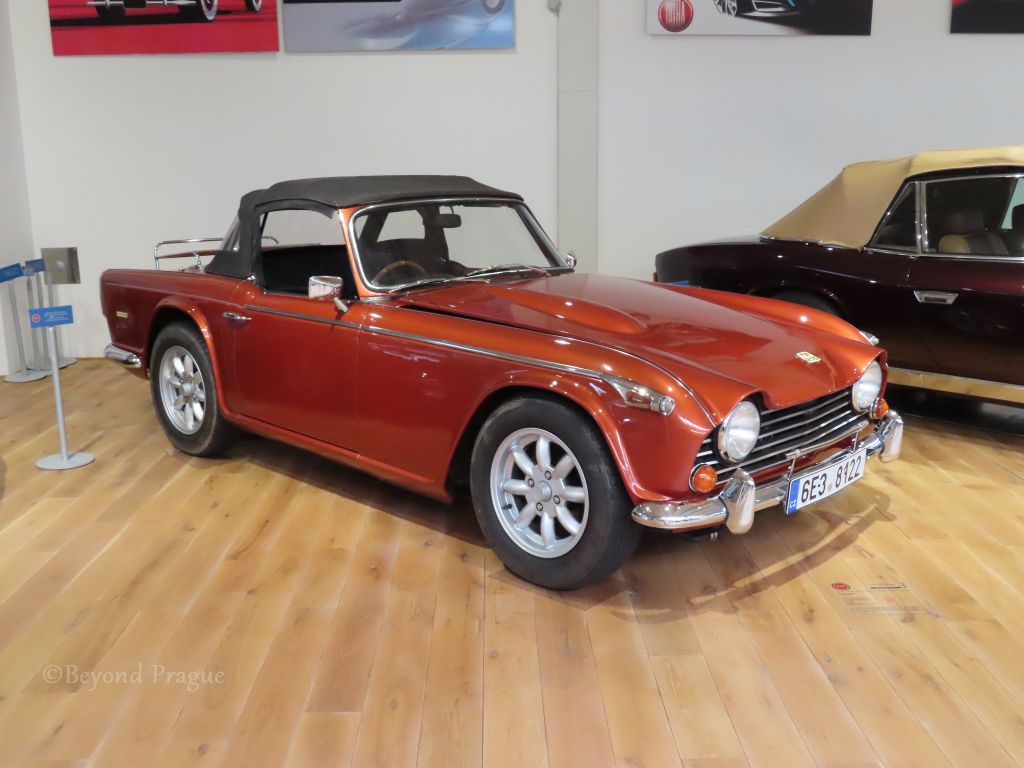
Veteran Arena does not limit itself to domestic vehicles. It also boasts the largest collection of classic British cars in the Czech Republic.
Among the British marques represented are Alvis, Aston Martin, Bentley, Frazer Nash, Invicta, Jaguar, Jensen Motors, and Triumph.
It is fascinating to compare the similarities and differences between British and Czech automotive design as you move through the collection.
British vehicles are only part of the international selection. Cars from Buick, Ferrari, Honda, Mercedes-Benz, Toyota, and Trabant are also on display.
One particularly memorable exhibit is a 1977 Toyota Celica ST that participated in a convoy of seven vintage cars—five of them Czech—driven from Prague to Osaka for Expo 2025. The journey covered approximately 16,000 kilometres through twelve countries across Europe and Asia and took about one month to complete.
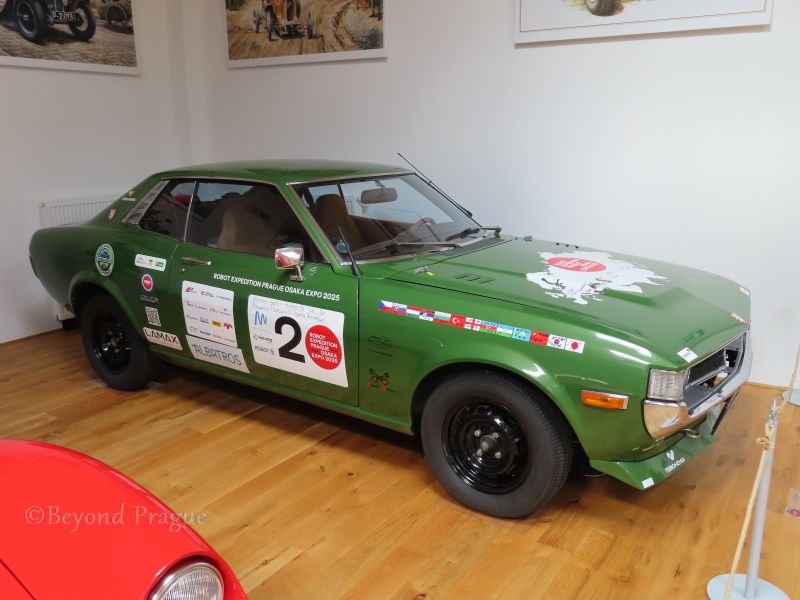
The graphics on the front of the car are especially worth examining. They include a large route map and the flags of the countries the group intended to visit.
Most of the flags bear check marks and handwritten arrival and departure dates. The flag of Uzbekistan, however, is crossed out, reflecting the group’s decision to reroute in order to avoid potential bureaucratic delays.
The convoy arrived in time for the official opening of the Czech pavilion at Expo 2025. The participants symbolized not only the durability of Czech engineering, but also the adventurous spirit that has long been part of the Czech national character.
The expedition also retraced the path of the Sakura Expedition of 1970. When Osaka hosted the World Expo that year, a challenge was issued for participants to arrive in unconventional ways. Four Czechs responded by hitchhiking and walking from Prague to Osaka across Europe and Asia.
From Four Wheels to Two
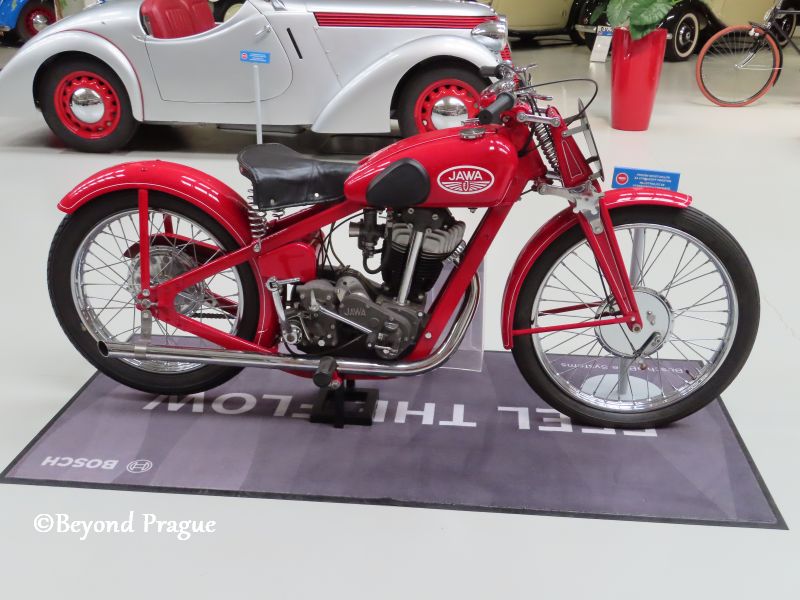
The Czech Republic has an equally rich tradition of motorcycle manufacturing. Earlier, I mentioned ČZ and Jawa, but other important names include Böhmerland, ESO, Ogar, and Praga.
Jawa and ČZ were dominant forces in several categories of motorcycle racing and did much to establish Czech engineering’s reputation at the highest levels of international competition.
As with the cars, the motorcycle collection is international in scope and spans numerous eras and categories. British marques such as BSA, Norton, and Triumph stand alongside American motorcycles from Indian and Harley-Davidson. Machines from Germany and Sweden are also represented.
Paying a Visit and Learning More
Veteran Arena is more than simply a building filled with old cars and motorcycles; it has a distinctive atmosphere all its own. Vintage petrol pumps and service-station equipment are interspersed among the vehicles, adding to the sense of stepping back in time.
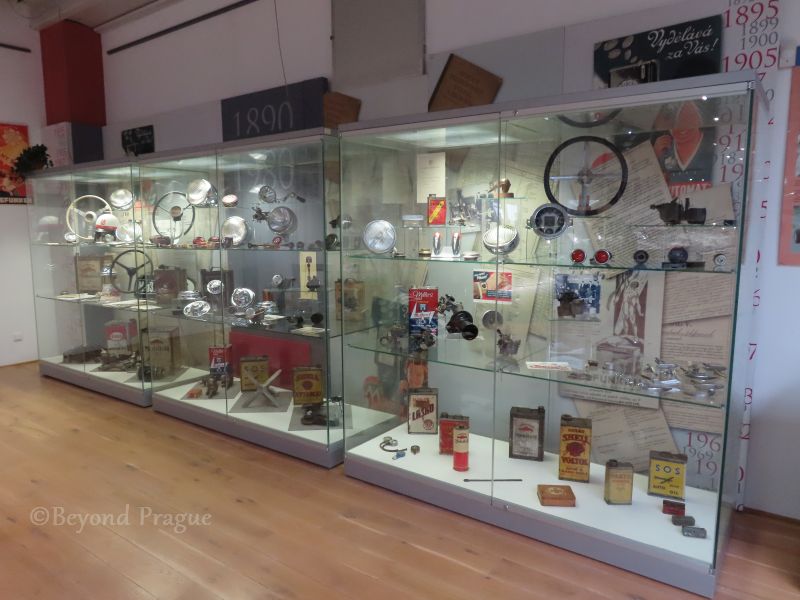
Numerous display cases contain automotive components and other motoring paraphernalia.
In addition to the vehicles, the museum includes vintage technologies such as radios and gramophones, which further enhance the period ambience. I spent two and a half hours there without noticing how quickly the time had passed, and I would recommend setting aside at least that much time to appreciate the collection fully.
Although tucked away in a less touristy part of the city, Veteran Arena is straightforward to reach. I arrived in Olomouc by coach and got off near the main railway station. From there, I took Tram No. 4 to the Pavlovičky stop, followed by a walk of about five minutes to the museum.
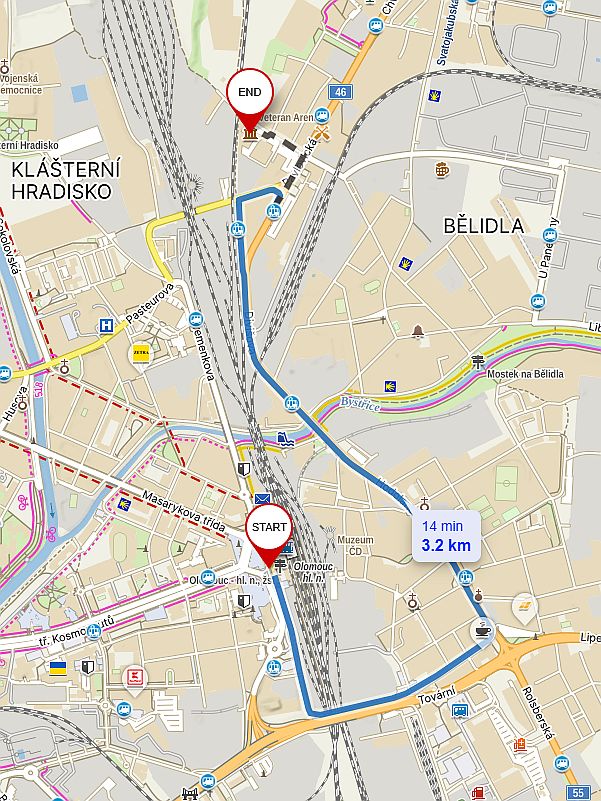
If you are starting from another part of the city, Olomouc Public Transportation provides an easy-to-use journey planner and a mobile app for purchasing electronic tickets. Both are available in Czech and English.
The entrance area contains the ticket desk, a security desk, and public washrooms.
At the time of my visit in May 2026, payment was accepted only in cash, and there was an additional fee for photography. My ticket included a barcode that had to be scanned at a turnstile to enter the exhibition hall.
The limited communication required to purchase my ticket was conducted in Czech, so I cannot comment on the staff’s ability to converse in other languages. In addition, all exhibit information panels were in Czech only. If you do not read Czech, it is advisable to have a translation app ready.
This potential language barrier should not dissuade you from visiting this outstanding museum.
To learn more, visit the official Veteran Arena website, which provides information on opening hours, admission prices, and other practical details in Czech, English, German, and Polish.
Olomouc has much more to offer visitors. For an overview of the city’s other attractions, see my article about Olomouc.

