

Moravian Retreat
The Czech Republic is internationally renowned for its spa towns, with more than 20 spread across the country. From an international perspective, however, the best-known are those in the west. Places such as Karlovy Vary, Františkovy Lázně, and Mariánské Lázně have attracted visitors for well over a century. Karlovy Vary, in particular, enjoys additional cultural prestige thanks to the international film festival it has hosted annually for more than half a century.
Luhačovice, in the country’s southeast, developed a reputation as a retreat where many of the leading figures in Czech and Slovak society could relax away from the spotlight. Among its notable visitors was Czech composer Leoš Janáček (1854–1928), who visited the spa many times between 1886 and his death. He drew inspiration for several of his compositions from both Luhačovice and its surrounding landscape.
Although Luhačovice has welcomed international guests throughout its history, it has retained a distinctly Czech character and occupies a unique place in the country’s cultural heritage.

Discovering Luhačovice
Nestled in the scenic Vizovice Highlands, a short distance southeast of Zlín, Luhačovice combines natural beauty with a centuries-old spa tradition. The first written mention of the settlement dates to 1412. It formed part of an estate acquired by the noble Liechtenstein family in 1620 before passing to the Serényi family in 1629, who retained ownership until 1945. The Serényis were a Moravian noble family of Hungarian origin.
It was under the Serényis that Luhačovice began its transformation into a spa destination. Although the mineral springs had long been known, the family was the first to promote their therapeutic properties and establish the settlement as a place of health and relaxation. This transformation began toward the end of the seventeenth century. Several of the springs were named after members of the family, including the best known, Vincentka, which honours Count Vincent Serényi (1751–1810).
Throughout the eighteenth and nineteenth centuries, new springs were developed and spa facilities expanded, steadily increasing Luhačovice’s reputation. By the mid-1890s, however, the resort had fallen into decline and was nearing bankruptcy. Despite the quality of its mineral waters, visitors increasingly complained about outdated facilities that offered little comfort, while poor transport links made the destination difficult to reach.

Back from the Brink
The late nineteenth and early twentieth centuries marked the beginning of an ambitious revival. A central figure in this renewal was Dr. František Veselý (1862–1923), who first visited Luhačovice in 1898. Despite the resort’s neglected condition, he immediately recognized its potential.
After considerable effort, Veselý established a joint-stock company in 1902 and purchased the spa from the Serényi family. Although the family retained some involvement, Veselý assumed the role of spa director and oversaw the emergence of a modern spa industry in Luhačovice. By the time he left in 1909, the resort’s recovery was well underway.
Another milestone came with the arrival of the railway in the early twentieth century, dramatically improving access and encouraging further growth.

The resort continued to prosper throughout the 1920s and 1930s, with elegant Art Nouveau buildings complemented by newer examples of Functionalist architecture. Development came to a halt with the outbreak of the Second World War and the German occupation in 1939.
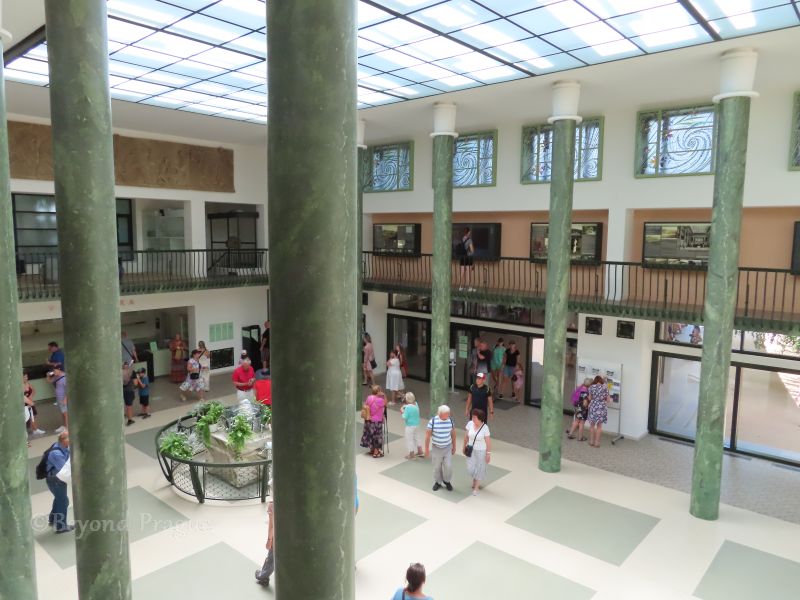
Several major projects had already been designed before the war but remained unbuilt, including the colonnade and Vincentka Hall, both intended to complete Spa Square. Designed by architect Oskar Poříska (1897–1982), these buildings were originally planned for completion during the 1940s but were not finished until the 1950s.
Today, Spa Square and the historic centre are protected as an urban monument zone by the Czech Ministry of Culture.
Dušan Jurkovič – The Poet of Timber
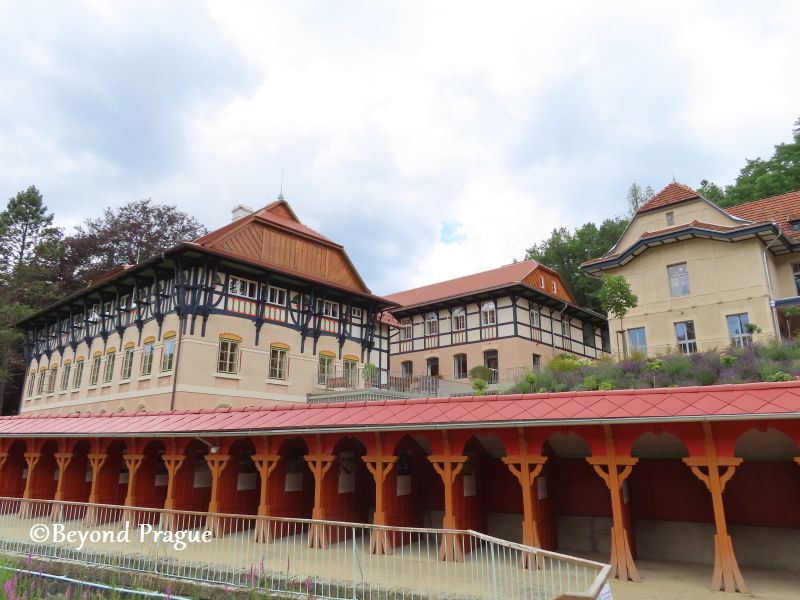
Few individuals influenced Luhačovice’s appearance more than Slovak architect Dušan Jurkovič (1868–1947). Between 1902 and 1914, he designed several of Luhačovice’s most distinctive buildings, including the imposing Jurkovič House at the heart of Spa Square as well as the Sun Spa and Hydrotherapy Institute complex at the north end of the square. Of the fourteen buildings Jurkovič designed or remodelled in Luhačovice, eight survive today, all of which are protected historic monuments.
Jurkovič worked in the style of Folk Art Nouveau, drawing heavily on Slovak folk traditions and iconography and combining them with Art Nouveau. Nicknamed “the poet of timber,” Jurkovič favoured wood and other indigenous building materials in his designs.
His work in Luhačovice went beyond designing individual buildings. He envisioned a spa resort in which architecture blended harmoniously with the surrounding landscape.
What’s in the Water?
The town’s reputation ultimately rests on the mineral springs that have attracted visitors for centuries. Like many spa destinations, Luhačovice’s waters are associated with a range of therapeutic uses, but their composition is what truly sets them apart.
The springs contain heavily mineralized prehistoric seawater with a naturally high carbon dioxide content, giving the water its characteristic effervescence. The principal minerals include hydrogen carbonate, chloride, sodium, potassium, and calcium. Depending on the spring, the water may also contain significant levels of barium, bromine, fluoride, iodine, iron, lithium, and magnesium.
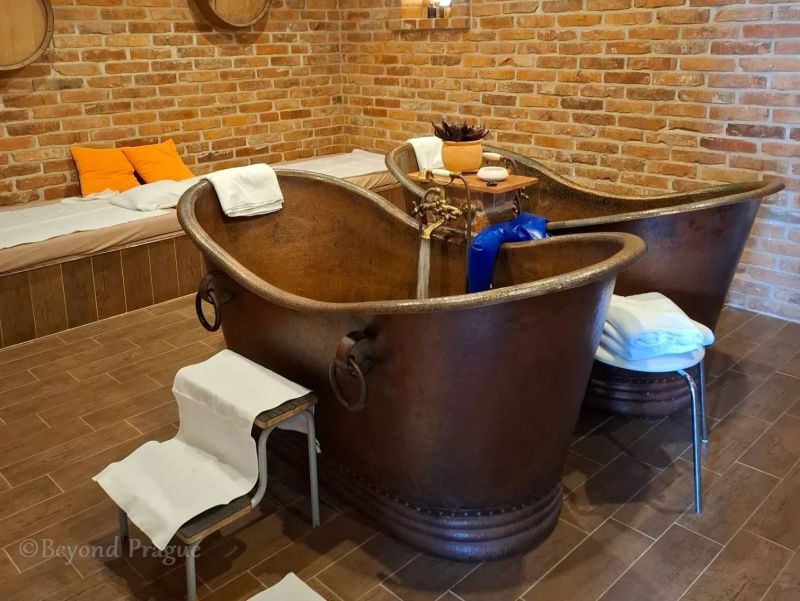
For generations, Luhačovice’s mineral waters have been used in spa treatments for conditions affecting the respiratory system, digestive tract, thyroid, musculoskeletal system, and skin. They are also incorporated into rehabilitation programmes following certain medical treatments and are popular with singers and athletes seeking to support respiratory health and vocal performance. As with any therapeutic treatment, visitors should seek medical advice regarding their individual health needs.
Luhačovice has around a dozen mineral springs. Roughly half provide freely accessible drinking water, while the remainder supply the spa’s baths and treatment facilities. Products made using water from the Vincentka spring are widely available throughout the Czech Republic, including bottled mineral water, nasal spray, throat lozenges, skin cream, and liniment.
A Feel for the Place
As one might expect from a destination devoted to rest and relaxation, Luhačovice has an unhurried atmosphere. The compact centre is easily explored on foot and offers a welcoming selection of cafés, restaurants, and accommodation. Visitors can choose from a wide range of hotels, many of which provide spa treatments tailored to different preferences and budgets.
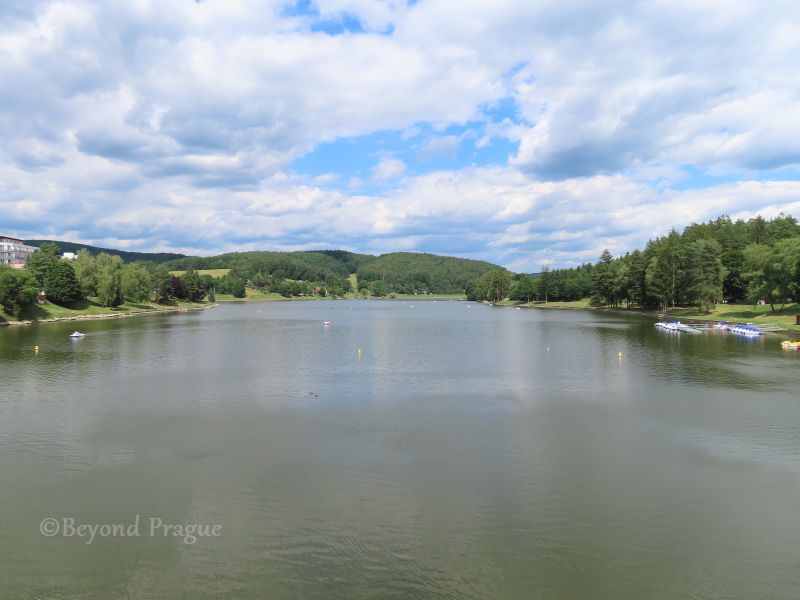
The surrounding Vizovice Highlands offer plentiful opportunities for walking and quiet exploration. Trails lead through wooded hills and scenic viewpoints, while the town’s reservoir provides another rewarding excursion. Easily reached on foot, it is an idyllic setting for a leisurely stroll. Parts of the shoreline are lined with cafés, pubs, and restaurants where visitors can enjoy the scenery, and designated areas are available for sunbathing during the warmer months.
As mentioned earlier, Luhačovice developed primarily as a spa destination for Czech- and Slovak-speaking visitors, and that heritage remains evident today. Compared with the better-known spa towns of western Bohemia, it retains a distinctly Czech atmosphere that gives it a charm all its own.
Paying a Visit and Learning More
Luhačovice is accessible by both road and rail, with the train and bus stations located beside one another. Depending on your point of departure, travelling by public transportation will usually require at least one transfer. Taxis are available from the stations to local hotels, although drivers may not always speak English or other foreign languages.
For those carrying luggage or planning to explore the surrounding region, travelling by car may be the more convenient option. Even so, the journey is well worth the effort. Reaching Luhačovice may take a little more planning than visiting some of the country’s larger destinations, but the reward is a spa town that has retained much of its authentic character.
To learn more about the town, its spa facilities, and upcoming events, visit Luhačovice’s official tourism portal.

