

The First Czech in the Skies
Czechs have a rich history in aviation that dates back almost to the dawn of powered flight. Jan Kašpar (1883–1927) was one of the Czech pioneers of aviation and is widely recognized as the first Czech to fly.
Kašpar was born into a wealthy family in Pardubice. His family owned the Hotel Veselka, a well-known local establishment that served as a social hub in the city prior to the Second World War. Ownership of the hotel changed hands in the early 1920s. During the Second World War, the building became an operational centre for the Czech resistance.
German forces eventually seized the building and repurposed it. After the war, it was converted into an office block. Ultimately, it was demolished in the early 1970s due to extensive structural degradation.
Jan Kašpar had little interest in the hotel business. He enjoyed many sports and developed a keen interest in technology from an early age. He trained as a mechanical engineer at the Czech Technical University in Prague and later continued his studies in Germany, specializing in aircraft engine design.
After returning from Germany, Kašpar worked for Laurin & Klement—the predecessor of Škoda Auto. He left this position to pursue his passion for aviation and his dream of building his own aircraft.

A False Start and a French Connection
By 1909, Kašpar had constructed his first aircraft. Due largely to his inexperience as a pilot and the aircraft’s under-powered engine, he was unable to get it airborne.
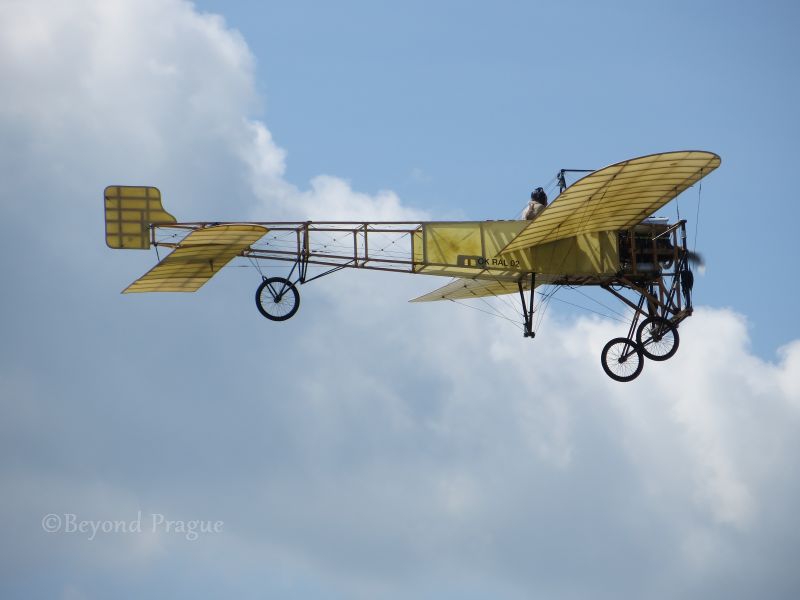
1909 was also the year that Louis Blériot made his historic flight across the English Channel. Upon hearing of Blériot’s achievement, Kašpar travelled to France and purchased a Blériot XI—similar to the one Blériot had used.
On April 16, 1910, Kašpar took off in his Blériot XI, becoming the first Czech to fly an airplane. However, he aspired to achieve more.
On May 13, 1911, Kašpar flew from Pardubice to the Velká Chuchle district of Prague. The flight lasted 92 minutes and covered 121 kilometres. It was the first long-distance flight not only over Czech territory but also within the Austro-Hungarian Empire. This achievement made Kašpar a household name and captured the imagination of the public.
On July 12, 1911, he flew the same aircraft to Kroměříž, landing to the applause of 15,000 spectators who had paid to witness the event.
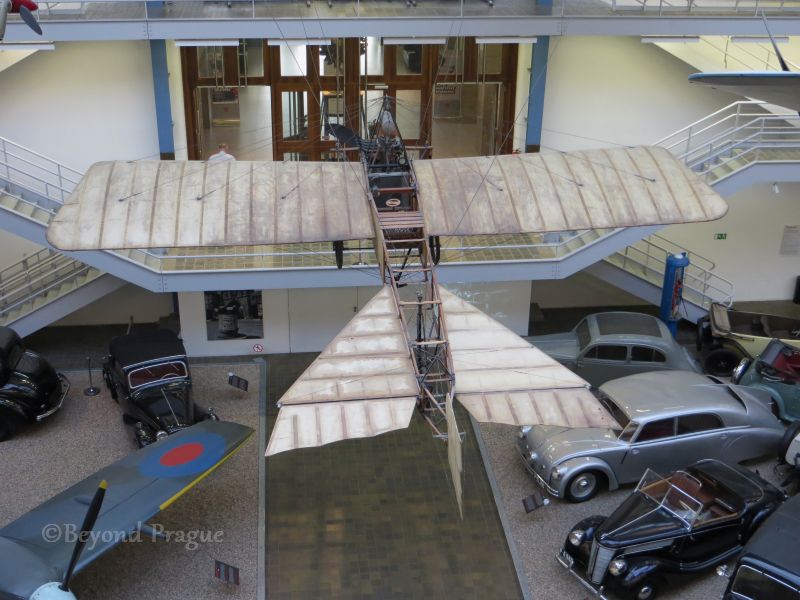
The aircraft he used for these flights was a modified version of the Blériot XI that he had built himself. Powered by a Daimler four-cylinder engine, he named it the JK Blériot XI—including his initials to distinguish it from the factory-standard model.
In 1913, Kašpar donated the JK Blériot XI to the National Technical Museum in Prague. Today, it is displayed prominently in the museum’s transportation collection.
War and Decline
Despite the fame brought by his flights, Kašpar’s flying career was brief. His last public flight occurred in July 1912.
In 1913, following the death of his father—a strong supporter of his aviation work—Kašpar was forced to abandon flying to manage the family estate. His father’s passing affected him deeply.
During the First World War, he worked as an aircraft technician and later briefly served in the Ministry of Public Works.
Kašpar’s later years were marked by hardship. He struggled with both the family business and a timber trading enterprise he launched after the war. Financial ruin and physical and mental health issues plagued him.
He died in hospital on March 2, 1927. The exact circumstances of his death remain a topic of debate.
Hospital records indicate that he died of pneumonia, possibly linked to long-term exposure to engine exhaust. This is plausible given his involvement in motorsport prior to his flying career.
Other sources suggest that he took his own life. According to some of these accounts, he was taken to the hospital after his sister found him unconscious with his flying scarf soaked with gasoline nearby. Given his dire financial and personal circumstances, this theory is also plausible.
The truth likely lies somewhere in between.
Regardless, Kašpar received a full religious funeral—a rite that would not have been granted had suicide been the official cause of death. He is buried in Pardubice Central Cemetery.
Jan Kašpar’s Legacy
Jan Kašpar is widely regarded as the father of Czech aviation, and Pardubice is often referred to as its cradle.
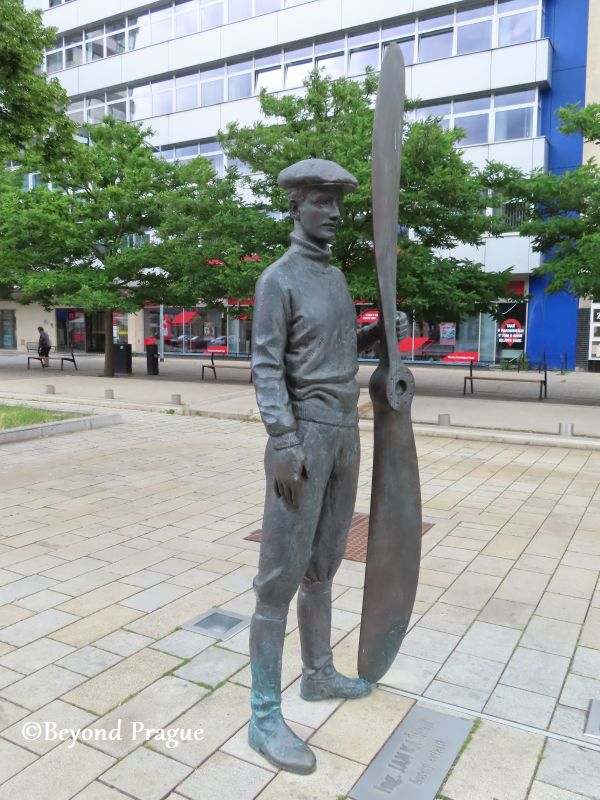
He is considered a hometown hero in Pardubice. A statue commemorating him stands near the former site of Hotel Veselka. The city’s airport terminal bears his name, and a small aviation museum also honours him. As of 2025, the museum is temporarily closed pending relocation to the Kunětice airport near Pardubice.
Each year, the city hosts an air show called Aviatická Pouť, typically held in late May or early June to coincide with the anniversary of Kašpar’s 1911 flight from Pardubice to Prague.
Nationally, his legacy is evident in the aviation enthusiasm his early achievements inspired, laying the foundation for the country’s rich aviation heritage.
Further Reading
Information about Jan Kašpar is limited outside the Czech language, and many available sources contain conflicting or inaccurate details.
The following articles are all reasonably reliable and respond well to online translators:
“Czech aviation pioneer Kašpar died 90 years ago, and it is still not known exactly how” — irozhlas.cz (2017)
The following articles were published in April 2025 to mark the 115th anniversary of Kašpar’s April 16, 1910 flight:
 Beyond Prague