
South Slavic Splendour
Towards the end of October 2025, we spent a week in Slovenia. This article offers an example of what you can do in this small but vibrant country in five days.
It was our first visit, and Slovenia left an excellent impression on us. We’d happily return to see more. Although the country covers only 20,271 square kilometres (7,827 square miles), there’s an incredible amount packed into that small area. From a tourism perspective, Slovenia truly is the definition of good things coming in small packages.
Our hotel was in the capital, Ljubljana, and our trip was a mix of business and pleasure. For the first couple of days, my girlfriend, Jana, attended business meetings, which gave me the opportunity to visit a few places she wasn’t particularly interested in. By mid-week, her meetings were done, and we were officially on holiday together.
Excluding travel days, we had five full days to explore. Here’s what we managed to do in that time:

Day One: The Founding of a Nation
After breakfast at our hotel, I made my way to Ljubljana’s train station and boarded a train for Pivka — a small town about an hour and a half southwest of the capital.
My destination was the Military History Park (Park vojaške zgodovine). The park features a well-organized collection of military vehicles and artefacts spanning from the Second World War to Slovenia’s independence in 1991.
More than just a military museum, the park offers an engaging way to learn about the Yugoslav resistance during the war, the rise and fall of Yugoslavia through the Cold War, and the emergence of modern Slovenia after its dissolution. One of the most fascinating exhibits is a walk-through timeline that illustrates these events in context.
The park also presents the Non-Aligned Movement, a nuanced element of the Cold War that Yugoslavia helped pioneer. This movement provided countries seeking self-determination with an alternative to strict alignment with either the Eastern or Western Blocs — offering greater flexibility in trade and development.
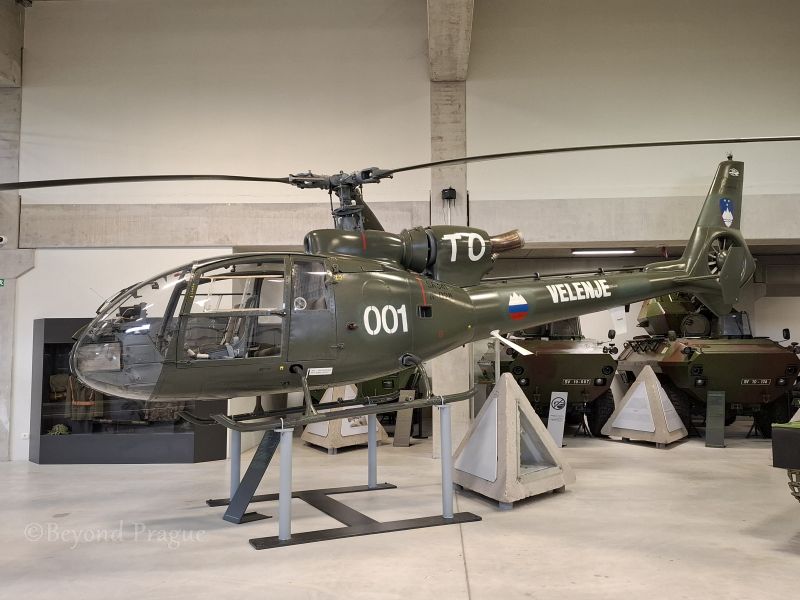
The collection includes equipment from both sides of the Iron Curtain, along with a significant amount designed and built in Yugoslavia itself. The main complex — consisting of three display pavilions, a central building, and an outdoor area — easily warrants two or three hours of exploration.
A walking trail also leads to remnants of the Alpine Wall, a line of fortifications built by Italy before the Second World War. According to the park’s website, the walk takes about 40 minutes, but I didn’t have time to include it in my visit before catching my return train to Ljubljana.
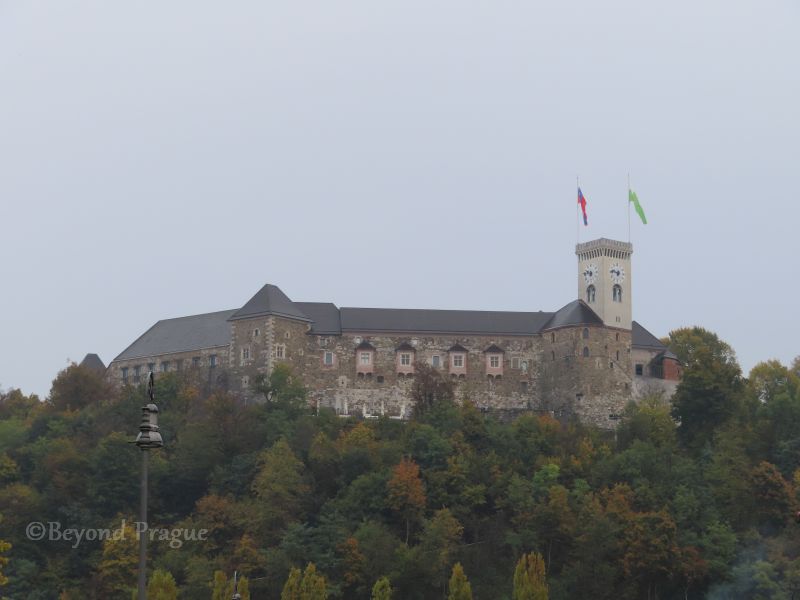
That evening, at Ljubljana Castle, We attended an informal meet-and-greet connected to Jana’s meetings. The event provided a stunning nighttime view of the capital and a chance to sample some very good Slovenian wine.
If you’re a wine lover, I highly recommend trying a glass or two of the local varieties while in Slovenia.
Day Two: Ljubljana Walkabout
After breakfast, I accompanied Jana to her conference venue and joined a guided walking tour of Ljubljana arranged for delegates’ partners. The two-hour, 6.5-kilometre walk was leisurely, as the city is mostly flat.
Our guide was knowledgeable and offered great insights into the city’s history and architecture. The historic centre features impressive Baroque and Secessionist buildings. The Baroque character stems from a reconstruction following a 1511 earthquake, while the Secessionist style developed after another major quake in 1895.
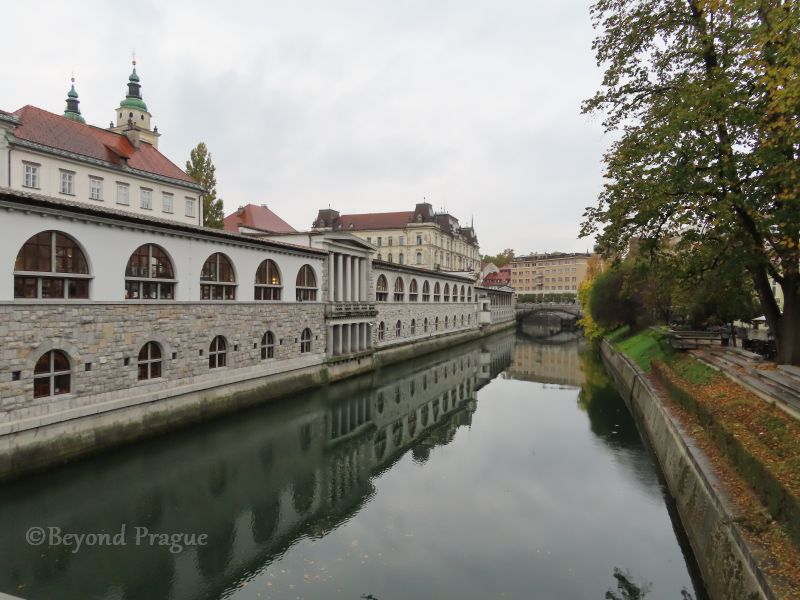
Much of Ljubljana’s Secessionist architecture is credited to local architect Jože Plečnik (1872–1957), whose influence on the city has been compared to that of Antoni Gaudí on Barcelona. Notable Plečnik works include the Ljubljanica river embankments, the Triple Bridge, the Ljubljana Central Market, the National and University Library, and Žale Central Cemetery.
Plečnik also left his mark in Prague and Vienna. Most notably serving as chief architect for the renovation of Prague Castle from 1920 to 1934. Another of his notable works in Prague is the imposing Church of the Most Sacred Heart of Our Lord in the city’s Vinohrady district.
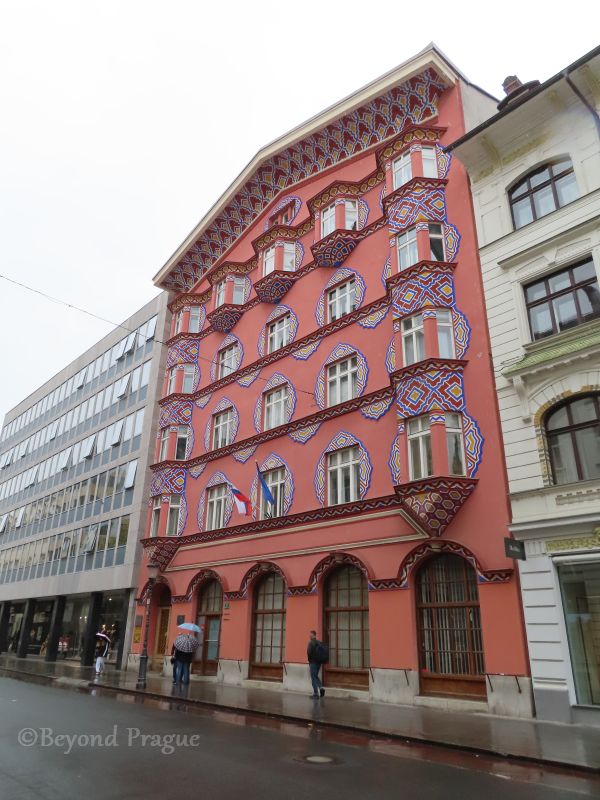
Another highlight of Ljubljana’s Secessionist style is the Cooperative Business Bank, designed by Plečnik’s contemporary Ivan Vurnik (1884–1971). While Plečnik adhered strictly to the style’s principles, Vurnik experimented more, blending Secessionist form with Slovenian folk motifs. Together with his wife, Helena (1882–1962), he designed the bank building in 1921. Its façade, painted in Slovenia’s national colours and patterned with folk-inspired designs, makes it one of the city’s most striking landmarks.
Our guide also introduced us to remnants of Emona, the Roman settlement that stood where Ljubljana is today. Founded around 50 BC, Emona grew from a military outpost into a town of about 5,000 to 6,000 residents before being destroyed in 452 AD. Traces of the ancient city remain scattered across modern Ljubljana.
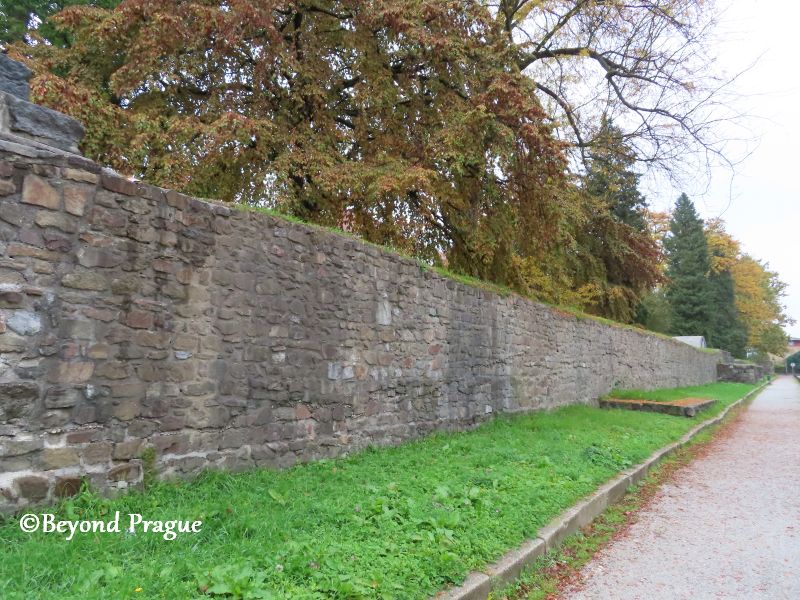
The walking tour ended around lunchtime, after which I returned to the hotel for a rest and a light meal. Later, I revisited several sites from the tour, picked up postcards at the tourist information office, and explored a few spots we hadn’t covered.
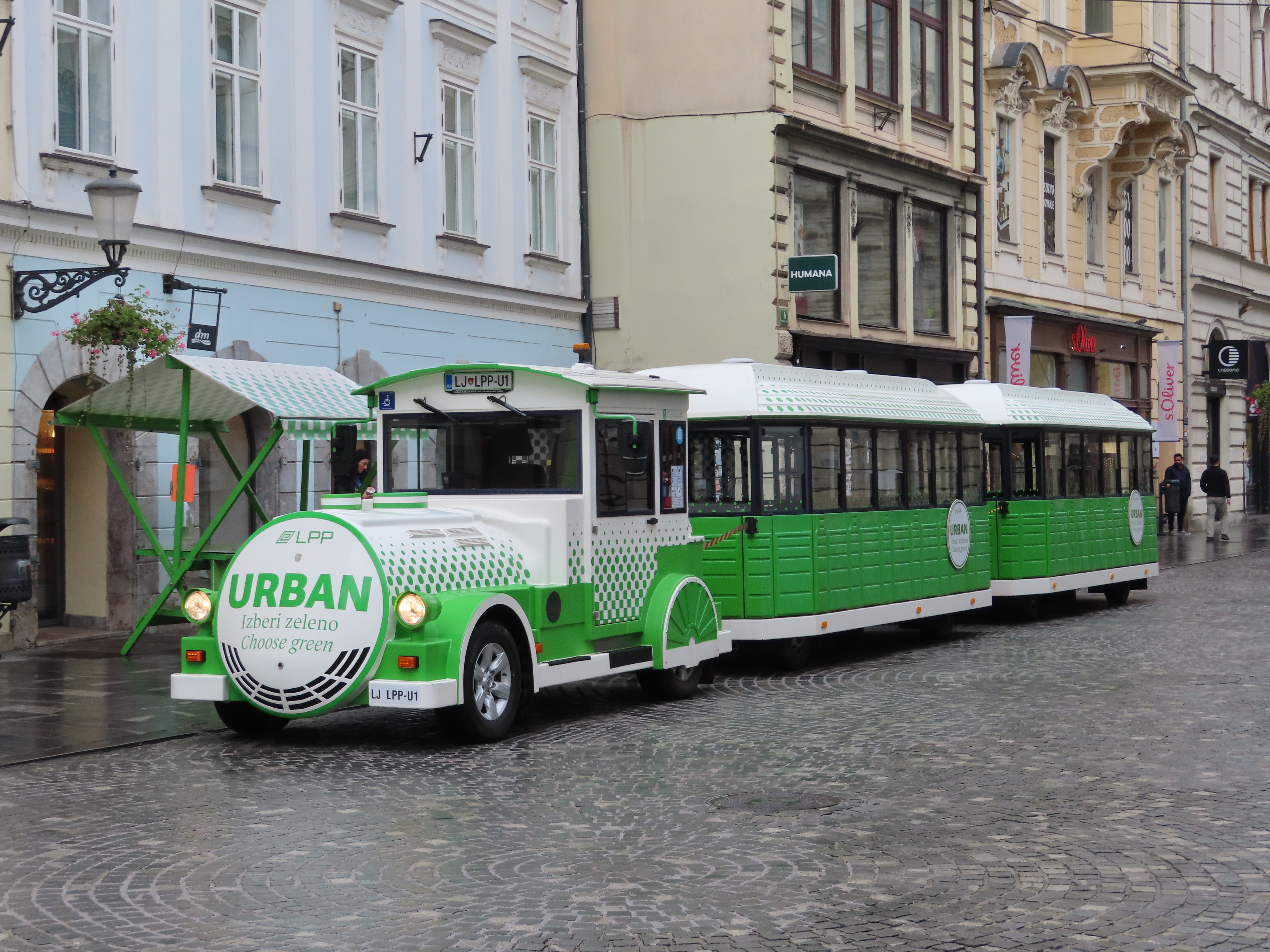
Ljubljana is compact, flat, and easy to navigate — ideal for walking or exploring via the small electric tourist train that circulates through the city centre.

Day Three: Lake Bled
By the third day, Jana’s meetings were finished, so we enjoyed a slow morning before joining a bus excursion to Lake Bled, one of Slovenia’s most famous destinations.
Located in the northwest of the country, it took our bus about 40 minutes to reach Bled from Ljubljana. I was immediately struck by the clarity of the lake water and pristine environment. For as popular as the area is, it certainly does not bear the scars of being overappreciated.
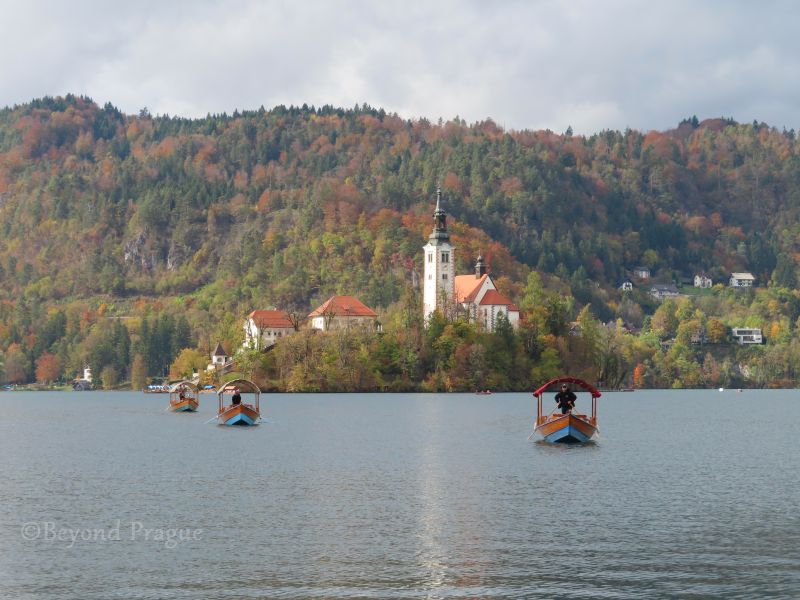
We boarded traditional pletna boats to reach Bled Island, home to the picturesque Church of the Assumption of Mary. After exploring the island for about half an hour, we continued to Bled Castle, perched on the opposite shore. Said to be Slovenia’s oldest castle, it now serves as a museum and vantage point with spectacular views of the lake, island, and Alps beyond.
Though our group’s schedule was tight, I would have loved to spend more time wandering the lakeside and surrounding trails before returning to Ljubljana for a formal dinner that evening.
Day Four: Lazy in Ljubljana
Knowing our final full day would be a demanding one, we took this day slowly.
We strolled from our hotel to the city centre, browsed a few souvenir shops, and boarded the small tourist train for a one-hour sightseeing circuit. Tickets cost €12 per adult and include disposable earphones for recorded commentary in about 20 languages, accompanied by a video presentation.
The train makes a couple of stops — including Ljubljana Castle — where passengers can disembark, explore independently, and rejoin a later train.
A small word of caution: the train’s entryways are narrow and legroom is limited. If you’re tall or broad-shouldered, you might prefer to explore on foot instead.

Day Five: Caves and Castles
On our last full day, we travelled 40 minutes southwest of Ljubljana with a small group to visit Postojna Cave Park, which includes Pojstona Cave and Predjama Castle.
We began at Predjama Castle, dramatically built into a mountainside — an architectural marvel and a formidable medieval fortress. The self-guided tour provides audio commentary in multiple languages via a handheld device.
The castle’s interior is practical and austere, reflecting its defensive purpose. Constant moisture seeps through the rock, so it’s easy to see why luxuries would not have lasted here. A natural shaft, enlarged in the 15th century, served as a secret passage for supplies during sieges. From the watchtower, visitors can enjoy breathtaking views of the valley below.
Tips for visiting Predjama Castle:
- Expect many staircases; it is not accessible for visitors with mobility challenges.
- Surfaces can be wet and slippery — sturdy shoes with good grip are essential.

After the castle, we made our way to the Postojna Cave, the second largest cave system in the country. The first stage of the cave tour is done by a small train and lasts for 15 to 20 minutes. It takes you through some very nice areas and prepares you for the more spectacular parts to come.
The next part of the tour a guided walk that follows a path of about 1.5 kilometres through some truly amazing rock formations.
If you’re lucky, you might spot an olm — a blind salamander endemic to the region. While the path is paved and treated for traction, we found the inclines a bit more strenuous than the website’s “easy” rating suggested.
Practical advice:
- The cave maintains a steady temperature of 10 °C (50 °F), so warm clothing and good shoes are recommended.
- Visitors with mobility needs should review accessibility details on the official website carefully, as there are specific requirements for wheelchair access.

Visiting Slovenia and Learning More
This trip was our first visit to Slovenia, and I certainly hope to visit again.
Getting there depends on your starting point. The country is accessible by air, land, and sea. Travelling from Brno, Czech Republic, rail was the most practical option for us. We took a Czech Rail train from Brno, transferring to a Slovenian Rail train in Graz, Austria. The journey took about eight hours and was comfortable and stress-free.
To learn more about the destinations mentioned here, the following websites are helpful resources:
 Beyond Prague