
Legacy of Steel
When you hear the term “Steel City,” a number of places around the world may come to mind. Many of them still carry that identity long after steel production has slowed or stopped completely.
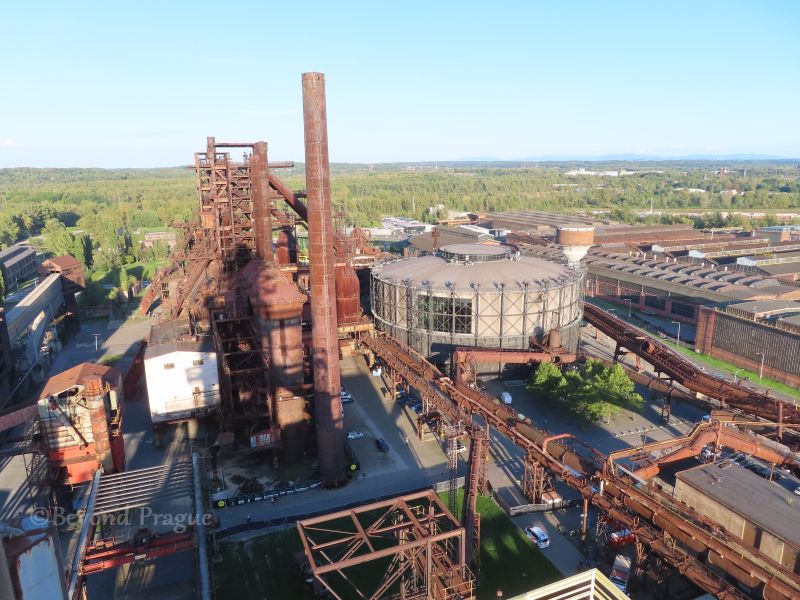
In the Czech Republic, no place is more closely tied to steel than the northeastern city of Ostrava — and more specifically, the district of Dolní Vítkovice. Here you’ll find the sprawling site of the Dolní Vítkovice steelworks.
The foundry shut down for good in 1998, but the site’s story stretches back nearly two centuries. Iron production here began in 1828, thanks to the rich deposits of bituminous coal and iron ore in Moravia. The works were created under the order of Archduke Rudolf of Austria (1788–1831), who was also the Archbishop of Olomouc. After his death, ownership first passed to the Archbishopric of Olomouc, and later, in 1843, to the Austrian branch of the Rothschild banking family.
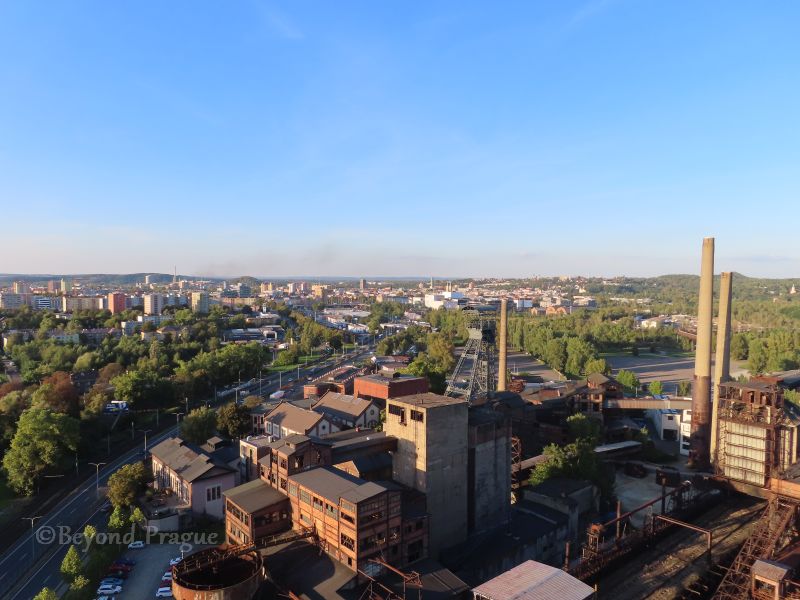
Under Rothschild ownership, the site expanded and modernized rapidly. It became the largest and most important iron and steel producer in the Austro-Hungarian Empire, supplying armaments during the First World War. Despite economic setbacks after the war and during the Great Depression, Vítkovice held strong through the interwar years.
The Rothschild era of ownership saw constant expansion and modernization of coal mining as well as iron and steel production at the site. It grew to be the biggest and most important iron and steel production site in the Austro-Hungarian Empire and was a key producer of armaments for the Austro-Hungarian military until the end of the First World War.
The company was nationalized after the Second World War and renamed Vítkovice Ironworks State Property in 1946. Expansion and modernization continued through the Socialist era, with projects both at home and abroad. But like many companies in former Socialist countries, the fall of Socialism brought major changes in structure and operations.
While steel fabrication carried on, the actual production of steel ended in 1998, closing a chapter of more than 160 years. The closure left Ostrava and much of the region struggling with unemployment. Fortunately, the story didn’t end there. In the early 2000s, Ostrava reinvented itself, attracting both domestic and international businesses.

To Scrap or to Save?
Even before the furnaces went cold, people were debating what to do with the site. Some wanted it demolished for scrap; others argued passionately for preservation.
In the end, preservation won. In 2002, Dolní Vítkovice was declared a National Heritage Site, and since 2001 it has been on the Czech Republic’s tentative UNESCO World Heritage list as part of “The Industrial Complexes at Ostrava.” The site is unique because the entire steel-making process — from mining coal to producing finished steel — took place here, uninterrupted, for more than a century and a half.
For Ostrava, keeping Dolní Vítkovice made perfect sense. The steelworks are not only part of the city’s DNA, but also an important tourist draw.
If you’re interested in industrial monuments, Ostrava is definitely the place to go when you’re in the Czech Republic. This is not only because of the monuments, but also because of the distinctly working class and non-touristy atmosphere of Ostrava.
Dolní Vítkovice is even nicknamed “the Hradčany of Ostrava,” a nod to Prague’s castle district and a reminder of how much this industrial landmark means to the city.
Rust Never Sleeps
The transformation from disused foundry to a lively cultural hub began in 2007 with the establishment of the DOV Group. By 2017, the complex was complete and became known simply as DOV.
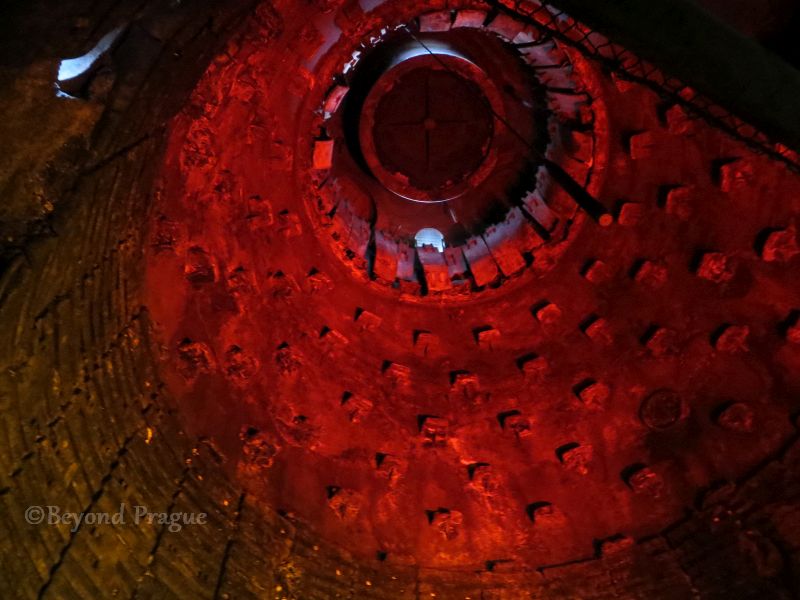
Today, you can take a guided tour of the steelworks and follow the journey from raw ore to finished steel. Tours are offered in English, German, Polish, and Russian for groups of ten or more. If you’re travelling solo or in a smaller group, you can use an audio guide (in English, German, or Polish) while following along with a Czech-language tour.
But DOV is more than history. It’s also one of the Czech Republic’s most exciting cultural venues. Throughout the year, it hosts concerts, art exhibitions, and festivals. The biggest of these is Colours of Ostrava — the country’s largest music festival and one of Europe’s most popular multi-genre events.
To give you an idea of the calibre of artists who’ve played here: Robert Plant (2006, 2014), Johnny Clegg (2009), Hugh Masekela (2012), and Midnight Oil (2017) are just a few of the names.
There are cafés, science centres, and the Bolt Tower — a striking glass structure built on top of Blast Furnace No. 1. Completed in 2015 and named after Jamaican sprinter Usain Bolt, it offers panoramic views of Ostrava and beyond. Bolt, who ran at Ostrava’s Golden Spike athletics tournament many times before his retirement in 2017, was present to autograph the wall at the tower’s opening.

A Place to Stay and A Bite to Eat
Ostrava has plenty of accommodation options, but if you want something unique, stay right on the old foundry grounds. Hotel VP1 was once a dormitory for steelworkers and has since been converted into a hotel with friendly, helpful staff. It still has a bit of that institutional feel, but that’s part of its charm.
Right next door is the “Gong” building, where you’ll find a tourist information centre and can buy tickets for the Bolt Tower and other attractions. Beside it is L’Osteria, an Italian restaurant. I’ve eaten there myself and can highly recommend it.

Paying a Visit and Learning More
Getting to Ostrava is straightforward. As the country’s third-largest city, it’s well connected by road, rail, and even has an international airport. Once you’re in town, Ostrava’s tram system makes it easy to get to Dolní Vítkovice and explore other parts of the city.
If you’re planning an extended stay, the city’s working-class character and off-the-beaten-path atmosphere make it a fascinating alternative to Prague or Brno.
Here are a few links to get you started:
- The official DOV website for information on the site and events
- The Colours of Ostrava website with festival details and photos
- The Hotel VP1 website, available in Czech and English
 Beyond Prague