A View from the Water
The Slovácko region, in the far south-east of the Czech Republic, is known for its Moravian wine-growing traditions and idyllic vistas of farmland and rolling hills. The area is also strongly influenced by Slovak folklore, and it’s home to some of the most distinctive folk costumes in the country.
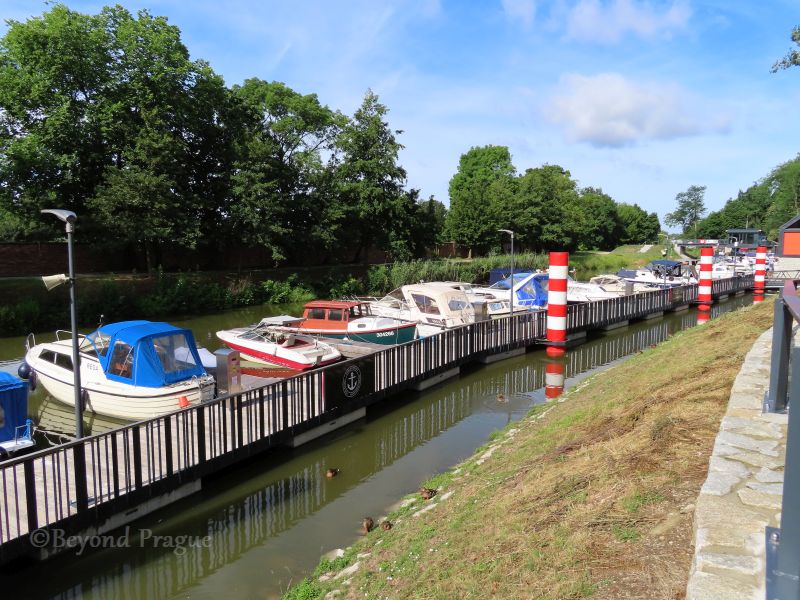
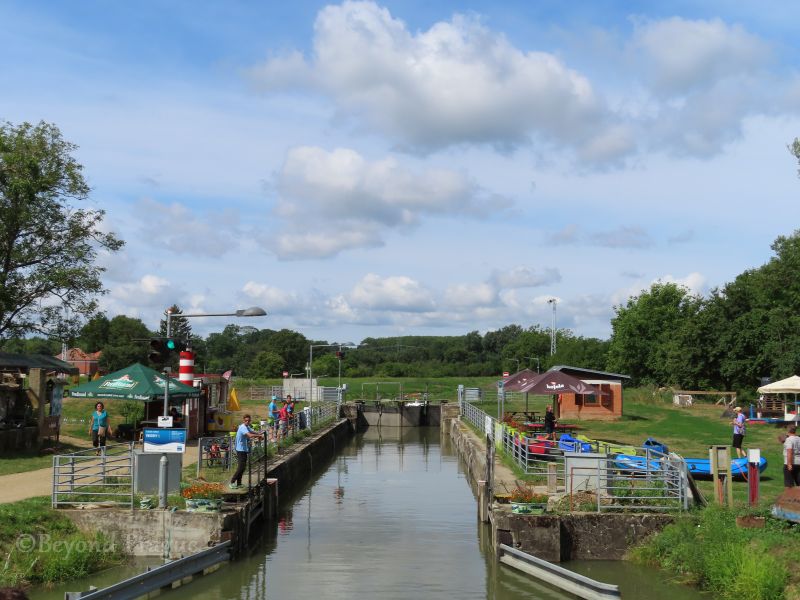
There are many ways to experience Slovácko, but one of the more unique is by taking a cruise along the Baťa Canal. The canal runs alongside the Morava River for about 52 kilometres, from Otrokovice near Zlín to its southern terminus at Rohatec. Along its route are 13 locks, more than 20 bridges, and nine ports offering visitor services and information.
Let’s spend some time on the Baťa canal:
A Historic Voyage
A cruise on the Baťa Canal not only connects you with the Slovácko region but also with a fascinating chapter of Czech history.
The canal was built between 1934 and 1938 as part of a much older and more ambitious idea—one that dates back to the 14th century. Charles IV (1316–1378), Holy Roman Emperor and King of Bohemia, envisioned a waterway linking the Oder River to the Danube. Although his plan was revived several times over the centuries, it has yet to be fully realized.
Tomáš Baťa (1876–1932), founder of the famous Baťa shoe company, championed the idea again in the late 19th and early 20th centuries. He saw the need to regulate the Morava River to improve irrigation of surrounding farmland and viewed the canal as a practical way to transport coal from mines near Rohatec to the power station in Otrokovice, which supplied his factories there and in Zlín. In the broader vision, this canal would serve as the first stage in connecting the Oder and Danube.

Construction of what became the Baťa Canal was financed jointly by the Baťa company and the Czechoslovak state. After Tomáš’s death, his half-brother Jan Antonín Baťa continued to support the project. The canal opened in autumn 1938, but only months later, in spring 1939, German forces occupied Czechoslovakia. During the Second World War, the canal played a role in keeping coal and supplies moving throughout the region. Near the war’s end, retreating German forces inflicted significant damage.
Repairs continued into the late 1940s, but the canal’s importance dwindled, and by the early 1970s it had fallen into complete disuse.
Interest in restoration remained low until after the fall of Socialism in 1989, when plans to connect the Oder and Danube resurfaced yet again. In the early 1990s, repairs began, and in 1995 the Baťa Canal reopened for sightseeing cruises.
Today, it is one of Slovácko’s most popular attractions.

Experiencing the Baťa Canal
There are many different ways to connect with the Baťa canal and surrounding area.
In addition to boat cruises, much of the canal is lined with cycling paths that connect to other routes in the region, making it easy to explore on two wheels. Some companies even offer sightseeing flights over Slovácko for those who want to view the canal from above.
For this article, I’ll focus on a sightseeing cruise we took in early July 2023.
Our two-hour trip carried us from Veselí nad Moravou to Strážnice aboard the Danaj. It was an enjoyable and peaceful ride through the agricultural landscapes that make Slovácko so iconic. We shared the canal with small rental boats and houseboats, and there was plenty of interaction and photo-taking between people on the water and cyclists along the banks.
The crew provided commentary in Czech about the history of the canal and the sights along the way. Because heavy rains in previous days had raised the water level, we were advised to duck under the bridges. People gathered on nearly every bridge to wave at us and watch everyone duck; it was as amusing to them as it was to most of us on the boat.

After about two hours, we arrived in Strážnice just in time for lunch. We disembarked, picked up a couple of small souvenirs, and headed to a nearby restaurant. After lunch, we visited Skanzen Strážnice, an open-air historic village showcasing Slovácko folk architecture and traditions.
Strážnice is also a great place to sample local wine, and the city hosts an annual international folklore festival—worth planning around if your timing is flexible.

Taking a Cruise and Learning More
Cruise season on the canal runs from the start of May to the end of October.
Our trip offered just a glimpse of what the Baťa Canal and its surroundings have to offer. For cruise options and practical details, the canal’s official website is an excellent first stop.
To learn more about the history of the canal, you can explore the detailed historical timeline also available online. And to learn more about Slovácko itself, visit the region’s official website, which is available in English, German, Polish, and Czech.
 Beyond Prague