

A Smart Tractor, You Say?
Since 1946, Zetor tractors have represented the Czech lands on the global agricultural market. Over the years, the company’s tractors have been exported to more than 130 countries and produced under licence in nine countries between 1964 and the 1990s.
Starting as a division of the manufacturing giant Zbrojovka Brno, Zetor eventually became a company in its own right in 1976. From the beginning, Zetor tractors were notable for their innovative design and quickly became recognised worldwide for their engineering.
Zetor was among the first tractor manufacturers to give serious attention to driver comfort and safety. Its tractors were early examples to incorporate roll-over protection and engine-noise dampening into the design of the driver’s cab, along with ergonomically arranged controls and clearly visible instrument gauges.
The company also pioneered the concept of parts unification in tractor design. This meant that a range of tractor models could be built using a high number of shared components, simplifying both manufacturing and maintenance.
After radical restructuring and a transition from state to private ownership in the early 1990s, Zetor faced a difficult period and entered bankruptcy before being purchased in the early 2000s. The company continues to operate today and has ambitious plans for the future.
With that in mind, let’s take a closer look at this legendary Czech product:
Child of Zbrojovka
The origins of Zetor can be found in Zbrojovka Brno, a manufacturing company whose lineage stretches back to artillery workshops in the Austro-Hungarian Empire during the nineteenth century.
Zbrojovka Brno was formally established in 1918 as a state-owned firearms factory following the creation of the First Republic of Czechoslovakia after the First World War. The factory quickly developed into a major industrial enterprise producing a wide variety of products for both military and civilian markets.
During the First Republic period, Czechoslovakia’s agricultural sector was served by tractors of both domestic and imported origin. Major domestic producers included Praga, Škoda, Svoboda, and Wikov, while imported tractors were primarily American. Models from Fordson, International Harvester, and John Deere were especially common.
During the same period, Zbrojovka Brno added automobiles to its growing list of products. As events would later show, this experience in automobile design and manufacturing provided valuable knowledge when the company began producing tractors after the Second World War.
The war dramatically changed industrial priorities, and agricultural equipment became a low priority for nations involved in the conflict. After the war ended, approximately 2,000 tractors were imported into Czechoslovakia through the United Nations Relief and Rehabilitation Administration (UNRRA) while domestic factories recovered from German occupation.
Although the pre-war tractor manufacturers planned to resume production after the war, Škoda was the only company able to do so successfully. It was in this gap that Zbrojovka Brno entered the tractor business.
The company established its tractor division in 1945, staffing it largely with engineers and technicians from its interwar automobile operations. The new division was placed under the leadership of František Musil, an automobile and aircraft engine designer who had joined the company in 1935.
The immediate catalyst for entering the tractor business came in June 1945, when the Czechoslovak government requested domestic manufacturers to design an economical, lightweight tractor suitable for mass production within just six months. By November of that year, Musil and his team had successfully produced a working prototype. Škoda was the only other manufacturer to present a prototype in response to the request.
Following a brief evaluation, the Zbrojovka design was declared the winner. The victorious prototype would form the basis of the company’s first tractor: the Model 25.
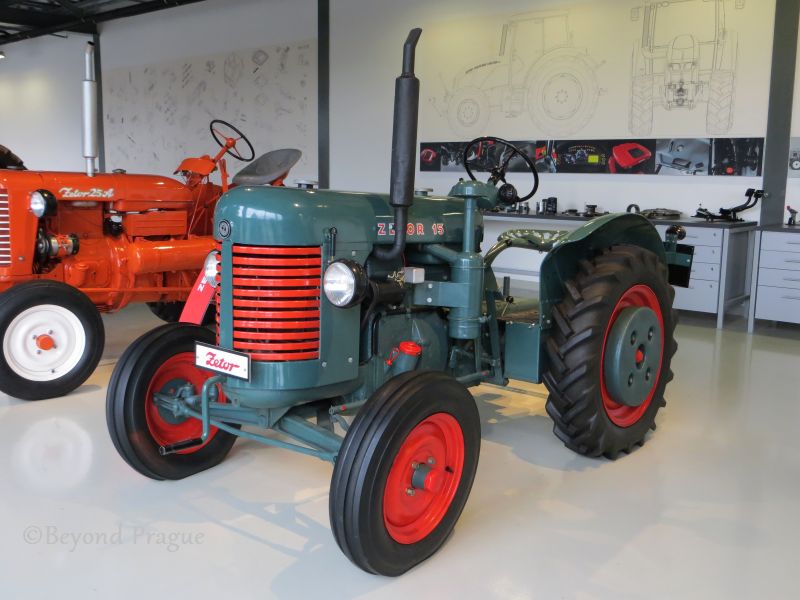
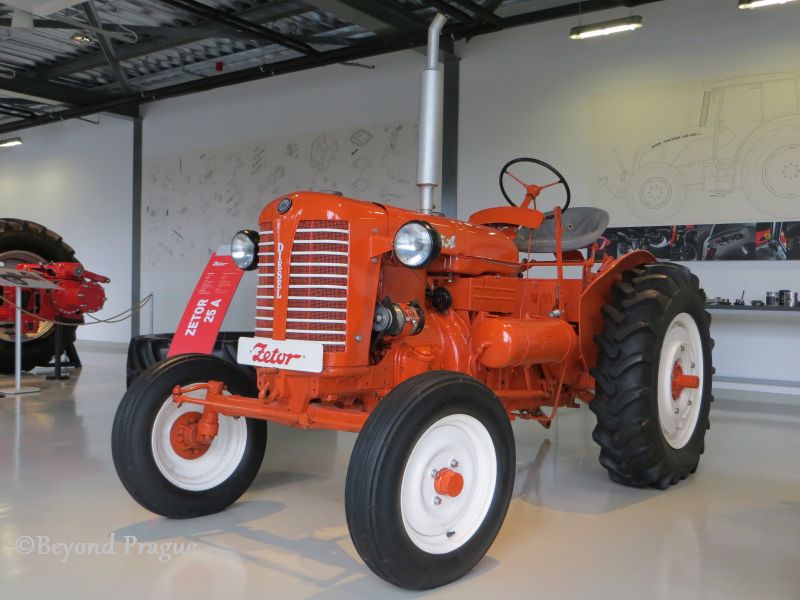
In the spring of 1946, the tractor division officially received the name Zetor and trademark protection was granted. In the same year, the first Model 25 tractors began rolling off the production line.
The Model 25 remained in production for sixteen years. A total of 158,570 units were built, of which 97,000 were exported. These figures place the Model 25 among the most widely produced European tractor designs of its era.
Even in the late 1940s, Zetor distinguished itself as a manufacturer willing to consider operator comfort and safety. Successive versions of the Model 25 introduced a padded driver’s seat with spring support and a small backrest. The model also replaced the traditional cartridge starting system with an electric starter. Careful attention was also given to the placement and visibility of dashboard instruments and gauges.
Another important Zetor development of the 1940s was the Model 30 of 1948. This tractor was notable for incorporating a fuel-injected diesel engine, which significantly reduced fuel consumption compared with earlier designs.
The decade closed on a celebratory note when the company completed its 10,000th tractor in February 1949.
On an Open Field
Entering the 1950s, Zetor faced little domestic competition aside from the challenge of meeting growing demand. Indeed, the company struggled to satisfy both domestic and export markets at the beginning of the decade.
Škoda remained involved in tractor production to a limited extent until the Communist government, which took power in 1948, decided that Zetor would become the country’s sole tractor manufacturer. By the mid-1950s, Škoda had withdrawn from tractor production entirely, leaving Zetor with the domestic market.
In 1952, Zetor moved from the main Zbrojovka Brno factory to a new site in the Líšeň district on the eastern side of Brno. At this location, the company no longer had to compete for factory floor space with other Zbrojovka operations and could carry out its own research and development. The Líšeň facility continues to serve as Zetor’s headquarters today.
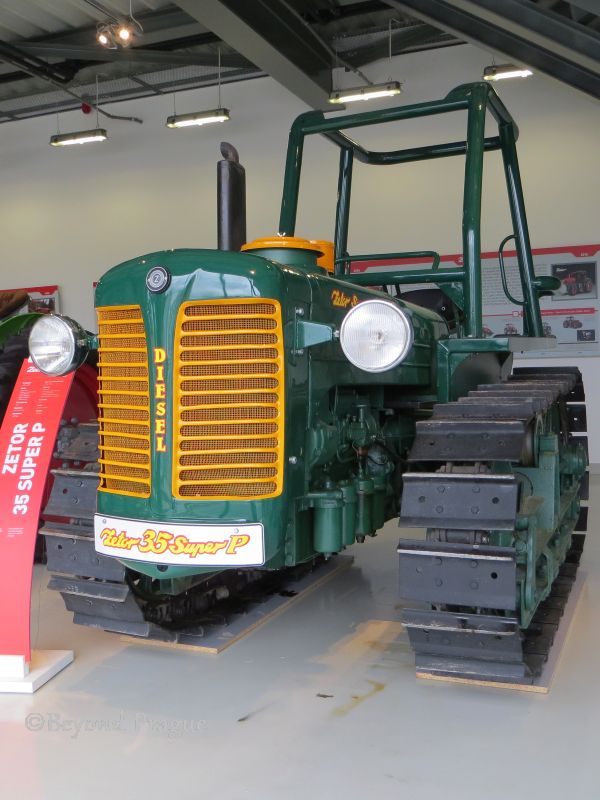
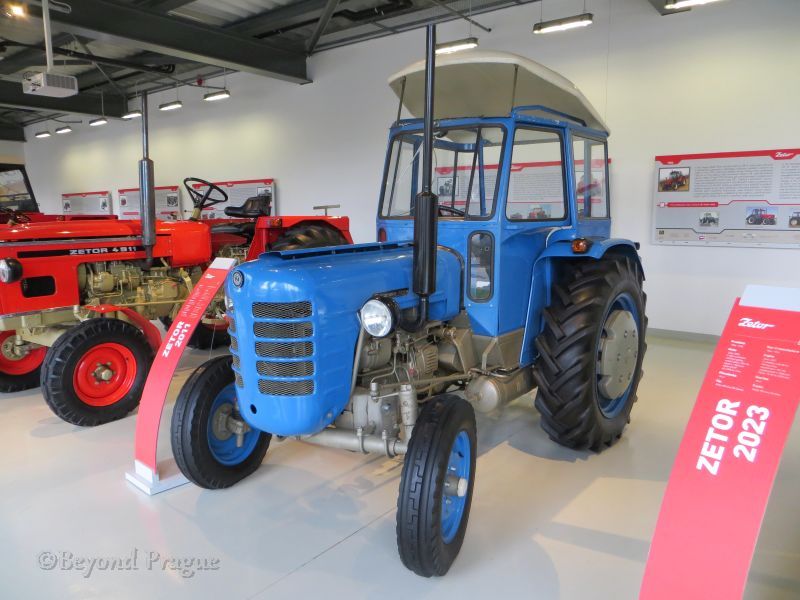
In 1955, Zetor introduced the Super 35, a model that featured improved suspension and a heating system in the driver’s cab to increase operator comfort.
In 1960, the Super 35 was extensively modernised and renamed the Super 50.
A Revolution on the Farm
In the late 1950s, Zetor introduced one of its most influential innovations: the concept of parts unification.
Under this system, entire ranges of tractors could be developed using a common set of components. The idea attracted widespread attention in the manufacturing world because it offered significant savings in materials, production costs, and maintenance. It also meant that tractor dealers no longer needed to devote valuable shelf space to components unique to a single model.
Between 1958 and the late 1990s, Zetor produced three major unified tractor ranges: UŘ1, UŘ2, and UŘ3. Each range included both standard models and specialised versions.
UŘ1: The First Unified Range
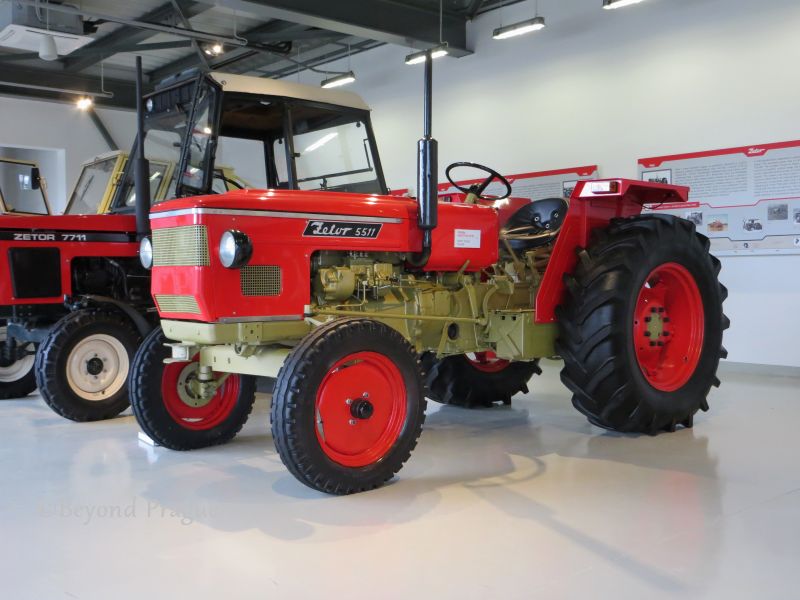
The UŘ1 range proved to be a strong starting point for Zetor’s new system.
Although the company designed an entirely new transmission for the series, it retained the reliable fuel-injected diesel engines used in earlier models. These engines made Zetor tractors particularly popular on export markets because they could operate reliably in a wide range of climatic conditions.
The UŘ1 series also introduced the Zetormatic weight-transfer system. This innovation shifted part of the weight of the attached field implement to the tractor’s rear axle, increasing traction in the soil.
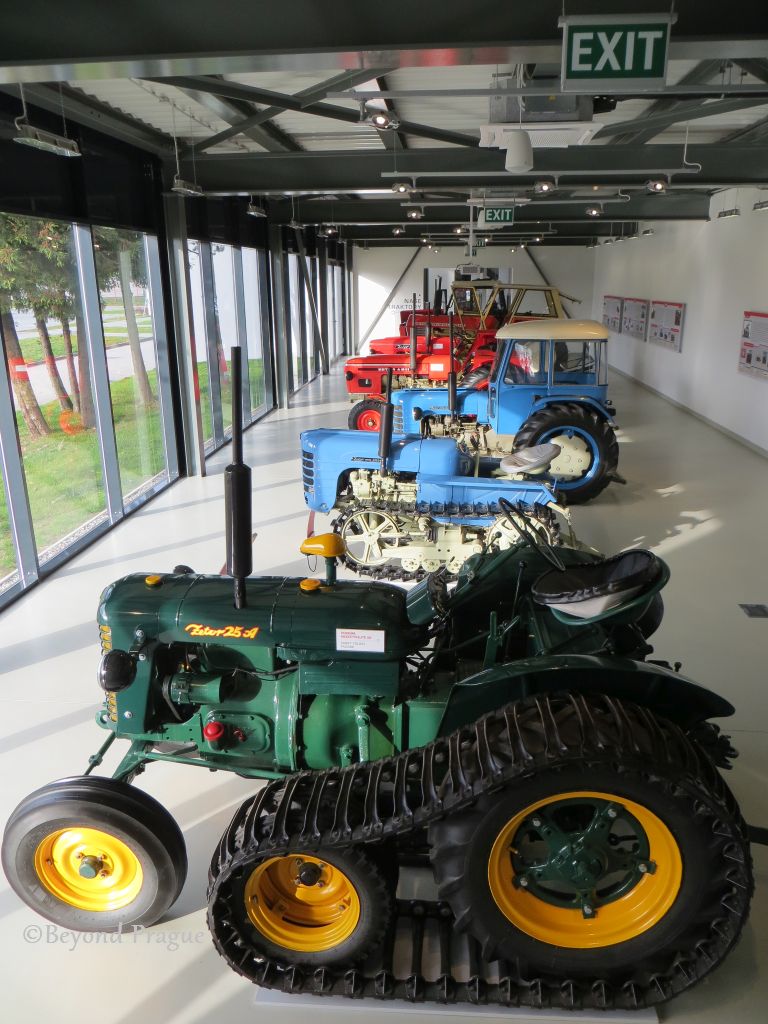
Several specialised variants were produced within the UŘ1 family. These included a half-track version for forestry work, a fully tracked model designed for steep vineyard slopes, and a narrow version intended for use in orchards.
Throughout most of the 1960s, the UŘ1 range enjoyed strong sales both domestically and internationally. However, with power outputs ranging from 25 to 60 horsepower, the tractors were not powerful enough for the larger agricultural operations found in parts of Central Europe.
Although the UŘ2 series debuted in 1968, the UŘ1 family has been revisited and modernised several times over the decades.
UŘ2: Redefining the Tractor
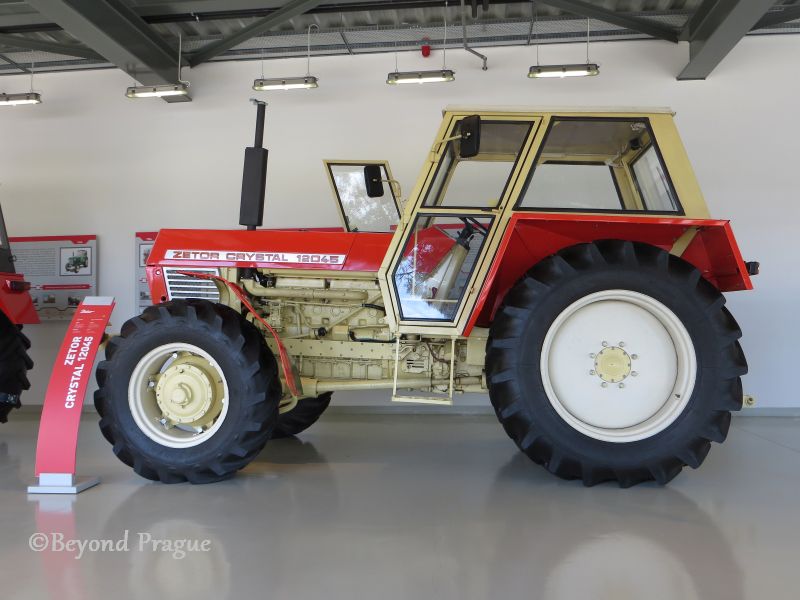
The UŘ2 range, collectively nicknamed “Zetor Crystal,” consisted of approximately eight models and was produced between 1968 and 1989.
The Crystal series not only addressed the demand for greater power and structural strength but also introduced several important advances in tractor design.
One of the most notable features was its safety-focused cab design. The Crystal was among the first tractors to incorporate an integrated safety cage intended to protect the driver in the event of a rollover.
The cab itself was mounted on special noise-reducing blocks. Combined with improvements to engine mounting systems, this allowed the Crystal to achieve interior noise levels below 85 decibels, an impressive figure for the time.
Beyond cab improvements, the Crystal offered several features as standard equipment that other manufacturers provided only as optional extras, if they offered them at all.
The Crystal series was available with both four- and six-cylinder engines. Later versions introduced turbocharging, enabling the four-cylinder engine to produce up to 100 horsepower and the six-cylinder engine up to 160 horsepower.
UŘ3: Keeping it Going
Zetor introduced the third unified tractor range, UŘ3, in 1991.
The primary goals of the new series were to replace the Crystal range and to fill a gap in the medium-power tractor market during the early 1990s.
The UŘ3 family consisted of eight models producing between 70 and 105 horsepower.
Building Abroad
By the mid-1960s, Zetor tractors had become widely popular internationally. As a result, the company began granting licences for the production and servicing of its tractors abroad.
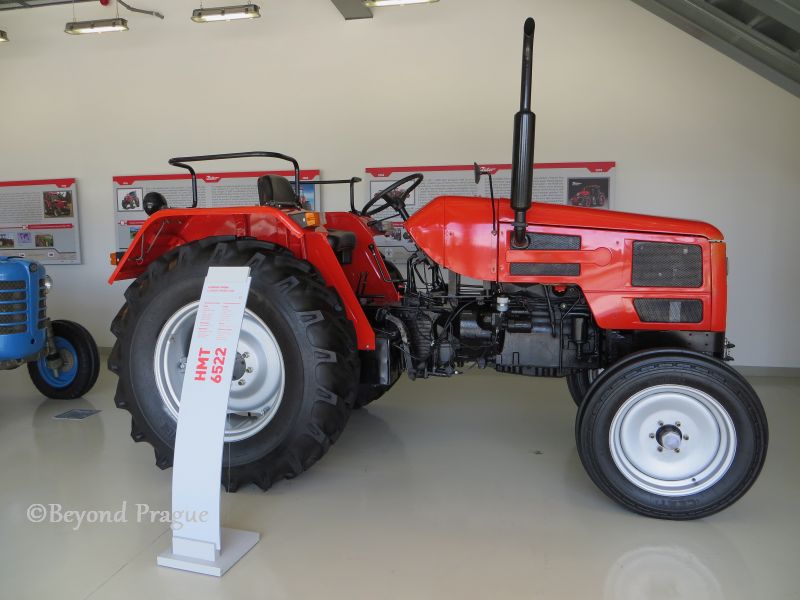
Between 1964 and the 1990s, Zetor tractors were assembled from factory-supplied components or produced under licence in Brazil, Burma, Ghana, Greece, India, Iraq, Japan, Mexico, and Poland.
Between 1993 and 1996, Zetor also entered into a contract with John Deere in the United States to produce several tractors under the American company’s branding for markets in Latin and South America. Although the tractors were based on Zetor designs, they were painted in John Deere’s well-known green and yellow colours and assembled in the company’s manufacturing facilities in Mexico. These tractors were marketed by John Deere as the 2000 Series.
Under the terms of the contract, Zetor was temporarily restricted from directly competing in Latin American markets. After the agreement ended, the company re-entered those markets in 1997 through a partnership with the Brazilian manufacturer Agrale. Zetor continues to supply components for Agrale tractors produced for the Brazilian market.
The 1990s and the New Millennium
Like many Czech companies, Zetor faced a turbulent period after the end of the socialist era.
The company was privatised in 1993 and spent much of the 1990s undergoing significant restructuring.
During this decade, Zetor relaunched modernised versions of both the UŘ1 and UŘ3 tractor ranges.
The turn of the millennium proved particularly challenging. The company changed ownership several times, underwent a revitalisation programme, and eventually entered bankruptcy before being purchased in 2002 by its current owners.
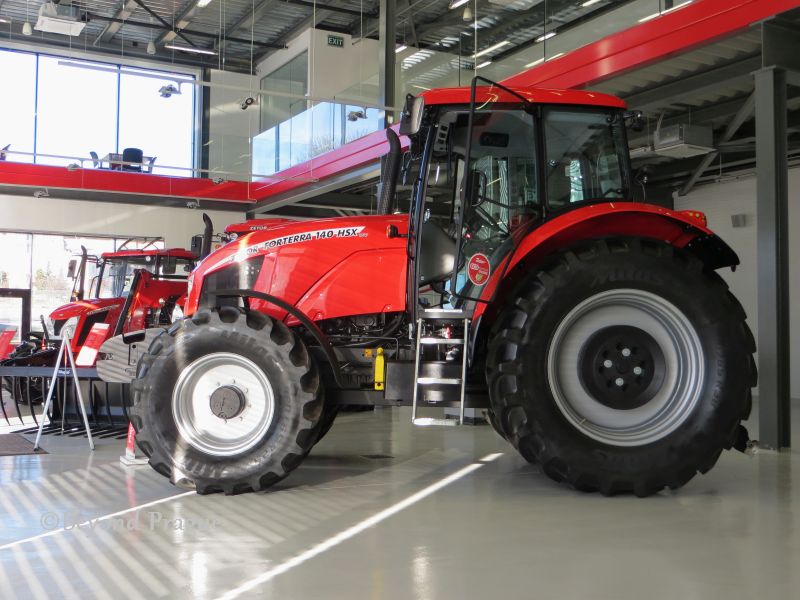
Under this ownership, Zetor has regained stability and renewed its product line. Today, the company produces several tractor series, including the Forterra, Major, and Proxima models. In 2015, Zetor revived the historic Crystal name for a completely modern tractor design.
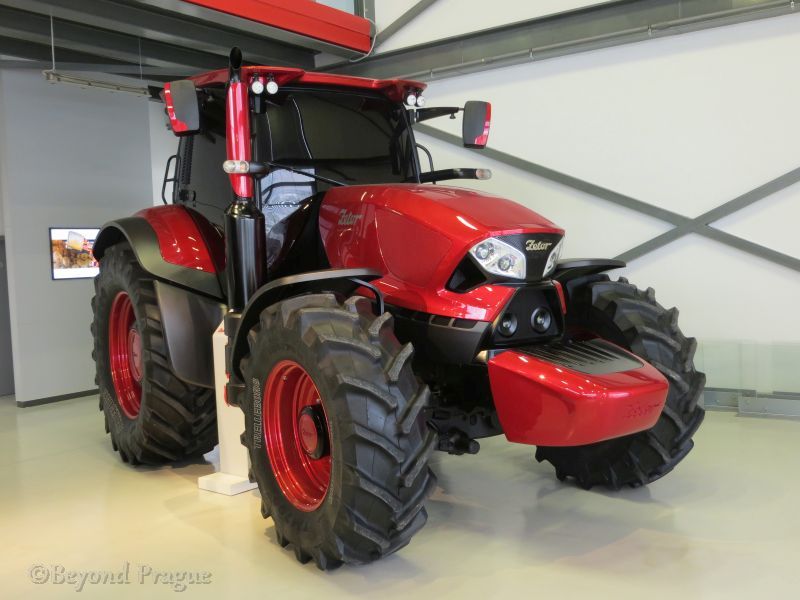
Zetor celebrated its seventieth anniversary in 2016. As part of this milestone, the company sought to develop a new design identity for future products. To achieve this, it partnered with the renowned Italian design firm Pininfarina.
Pininfarina created a new design concept that was unveiled as a full-scale mock-up at the Agritechnica exhibition in Hannover, Germany, in 2015.
Zetor has applied Pininfarina design concepts to all their models since the partnership was made.
With famous automotive clients such as Alfa Romeo, Ferrari, and Maserati, Pininfarina’s involvement has brought a distinctive design perspective to the world of agricultural machinery..
Learning More
The following links provide further information about many of the topics covered in this article:
- Official Zetor website
- A historical timeline of Zetor up to their 75th anniversary
- An overview of Zetor’s unified tractor ranges
- An article about the collection of a Zetor enthusiast in the UK
 Beyond Prague