
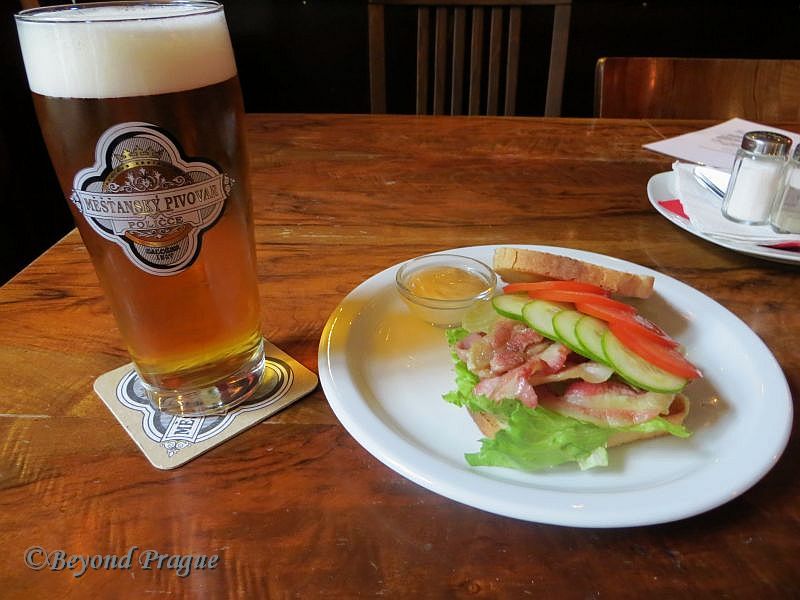
Brewing Before the Year 1000
The history of beer in Europe is closely tied to the Czech lands. The first documented brewery in the region was established at the Břevnov Monastery in 993 AD. The South Bohemian cities of Plzeň and České Budějovice—two of the best-known Czech brewing centres to foreigners—have been producing beer since the 13th century.
This country’s long-standing association with beer, along with its reputation for producing some of the best beer in the world, is often linked to regional soil conditions that support the growth of high-quality hops, a key ingredient in brewing. It is often said that, during the Middle Ages, Czech hops were so highly valued that severe penalties were imposed on those caught exporting cuttings for cultivation abroad.
The history of Czech beer is long and rich, and not really the focus of this article. More in-depth historical information can be found through the resources linked at the end.

A Brief Overview of Czech Beer
In a country where almost every town seems to have at least a small brewery—and every town has at least one pub—a visitor might expect a wide variety of beer styles. However, this isn’t really the case.
Traditionally, Czech beer production leans heavily toward lagers, with many sources claiming that over 90% of beer produced in the country falls into this category.
While lagers remain the most common, other styles have grown in popularity in recent years. Wheat beers and pale ales are becoming more widely available, and radlers are especially common during the summer months. Craft and specialty beers have also seen a noticeable rise, particularly from smaller breweries.

Large Breweries vs. Independent Producers
Many Czechs I’ve spoken with who remember their country’s beer before the fall of socialism and accession to the European Union have expressed concern about changes in the brewing industry. In particular, they note that several well-known brands were sold to foreign owners and have since declined in quality. Names such as Starobrno and Staropramen are often mentioned in these discussions.
While I can’t personally compare past and present—I arrived shortly after the country joined the EU—I’ve found my own preferences tend to favour beers produced by smaller, independently owned Czech breweries.
Although I haven’t tried every beer available, I’ve particularly enjoyed lagers from Bernard, Dalešice, Polička, and Svijany. These are widely available in pubs throughout the country, and each offers consistently high quality.
If lager isn’t your preference, I would recommend trying one of the ales produced by the Matuška microbrewery. Established in 2009, Matuška has gained a strong reputation, and its Raptor IPA is especially popular. Both Matuška and Svijany also produce excellent wheat beers.
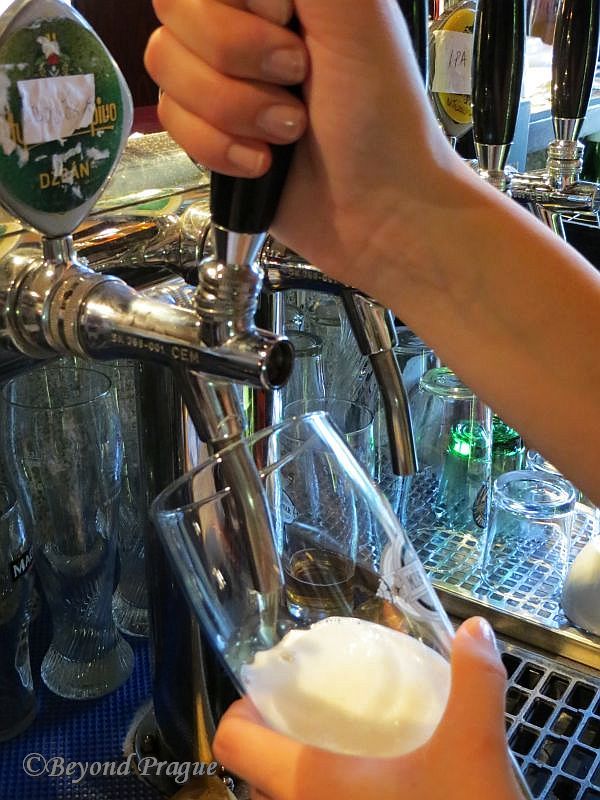
Getting the Most from Czech Beer
Whether Czech beer lives up to the hype largely depends on where you drink it. Even the best beer can be rendered unpalatable through poor handling by a careless pub.
There is plenty of advice available on how to find “the best” Czech beer. In my experience, the most reliable approach is to choose a well-regarded pub serving beer from a reputable, locally owned brewery. Do that, and you’re very likely to enjoy a pint that lives up to the country’s reputation.
Further Reading and Learning More
This article provides a concise overview of Czech beer history:
Radio Prague Article about Czech Beer
For lighter reading and trivia:
Eating Europe Article about Czech Beer
Note: This article was originally published in November, 2013
 Beyond Prague
I heard a lot of hype about Czech beer before our visit. That is was beer than German and Belgium beers and that the Czech drink more than any other country. Regardless of what the stats are or who’s beer is better, what I discovered on my own is that one, I really enjoy Czech beer. It’s clean, fresh and perfect for hot and cold weather. Two, traveling to the Czech Republic to enjoy their beer at the source, is a must.
Indeed, Czech beer is very much up to the hype most of the time. There are still some brands not up to the standard, however.
With regards to Belgian beers, I’d be very hesitant to compare those to any other beers. The Trappist and monastic beers are really their own thing.