
Born in Battle
In the present day, Tábor is an important transportation hub and commercial centre in South Bohemia. However, the origins of this city can be found in one of the more pivotal events in Czech history: the Hussite Wars (1419–1434).
Named after the religious reformer Jan Hus (c. 1372–1415), the Hussites were a Protestant movement that rebelled against Roman Catholic forces for 15 years before eventually being defeated. Tábor was established in 1420 as the command centre for the Hussite forces; it was also home to the Taborites, a radical branch of the Hussite movement.
The city took its name from Mount Tabor in present-day Israel. However, in contemporary Czech, the word “tábor” translates as “camp” or “encampment” in English—a very appropriate name given the history of the place.
From 1437 to 1547, Tábor grew and prospered, gaining great influence in Bohemia. It was granted royal city status in 1437 and enjoyed a high degree of autonomy.
The city’s fortunes took a downturn in 1547 when it refused to assist Ferdinand I, then King of Bohemia, in his campaign against German Lutherans—an event known as the Estates Revolt. In response, the king confiscated a significant portion of the city’s lands and wealth.

In 1618, at the outbreak of the Thirty Years’ War (1618–1648), the city again stood against Habsburg forces. While it held its ground for three years, it eventually surrendered and was heavily looted by Austrian troops. In the final year of the war, the city was again looted, this time by Swedish forces.
In the wake of the Thirty Years’ War, Tábor experienced a long period of peace and rebuilding. Eventually, it became a centre of culture and enlightenment and played an important role in the Czech National Revival movement of the late 18th and early 19th centuries. This movement responded to the Germanization policies of Habsburg rule, which had severely damaged Czechs’ knowledge of their own culture and threatened the existence of the Czech language itself. The revival rekindled interest among Czechs in their own customs, history, and language.
Let’s spend some time in Tábor:
Start at the Heart
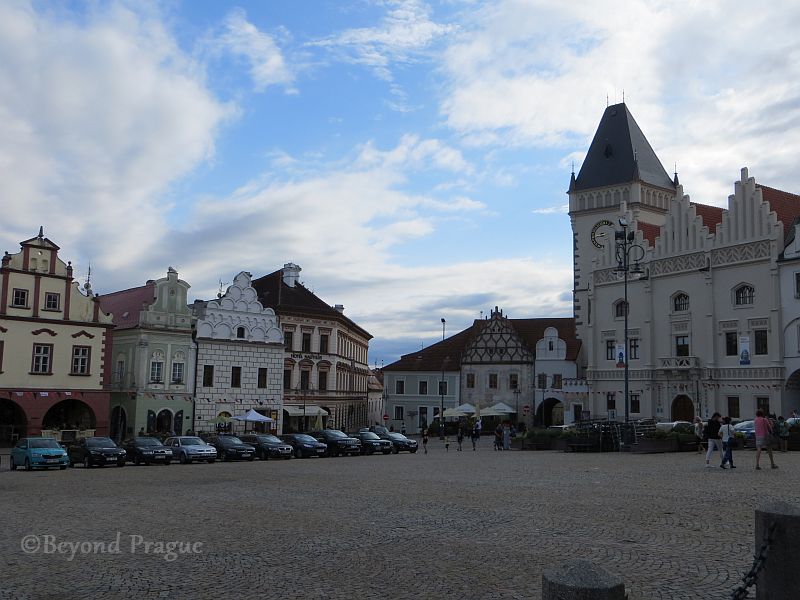
The centre of Tábor is well preserved and designated as an urban monument reservation protected under Czech law. Žižka Square is the focal point of the historic centre and a good place to begin your exploration of the city. If you’re looking for inspiration or advice, the tourist information office is located on the square in the town hall.
The square is lined with architecturally and historically valuable Renaissance-style burgher houses and reflects the city’s prosperous period between the mid-1400s and mid-1500s.

You will also find a prominent statue of Jan Žižka (c. 1360–1424), for whom the square is named. Žižka was a follower of Jan Hus and a highly successful general during the Hussite Wars, in spite of eventually losing both eyes in battle. He is enshrined as a national hero among Czechs. In the context of Tábor, he can be seen as a hometown hero, as he was born in the nearby village of Trocnov—a district of the contemporary town of Borovany.
To learn more about Žižka, the Hussites, and the Hussite Wars, a visit to the Hussite Museum is certainly in order. The museum is housed in the old town hall building on Žižka Square. It is divided into multiple sections, and you can pay to see all of it or just selected exhibits.
Aside from the historical aspects, Žižka Square also offers several restaurants serving a range of cuisines. In the summer months, most of these restaurants have outdoor terraces, so you can enjoy a view of the square with your meal.

Going off Centre
There’s more to Tábor than just the historic core. The city is generally walkable, and the tourism website offers tips on several self-guided walking tours.
Just east of the centre, you can visit the Jordán reservoir, which dates to the late 1400s and is the oldest reservoir in Central Europe. Historically, it stored water for the community; today, it serves as a recreational area where many people enjoy various water sports in the summer months.

In the Klokoty district to the west of the centre, you’ll find a Baroque-style pilgrimage church and a Way of the Cross leading up to it. The church, consecrated to the Assumption of the Virgin Mary, dates to the early 1700s.
Among the city’s other attractions, there is a small botanic garden. Established in 1866, it is the second-oldest botanic garden in the country.
For something lighter and more whimsical after taking in all the history, Tábor also offers several smaller museums, including one dedicated to chocolate and marzipan and another dedicated to Lego.

Getting There and Learning More
As Tábor lies on the train line connecting Prague and České Budějovice, rail is the best way to reach the city if you are travelling from either of those centres and don’t have a car.
If you decide to stay directly in Tábor when you visit, the city offers a variety of accommodation options to suit most tastes, from campgrounds to four-star hotels.
To get a broader sense of what Tábor offers visitors, please follow this link to the city’s tourism website.
 Beyond Prague