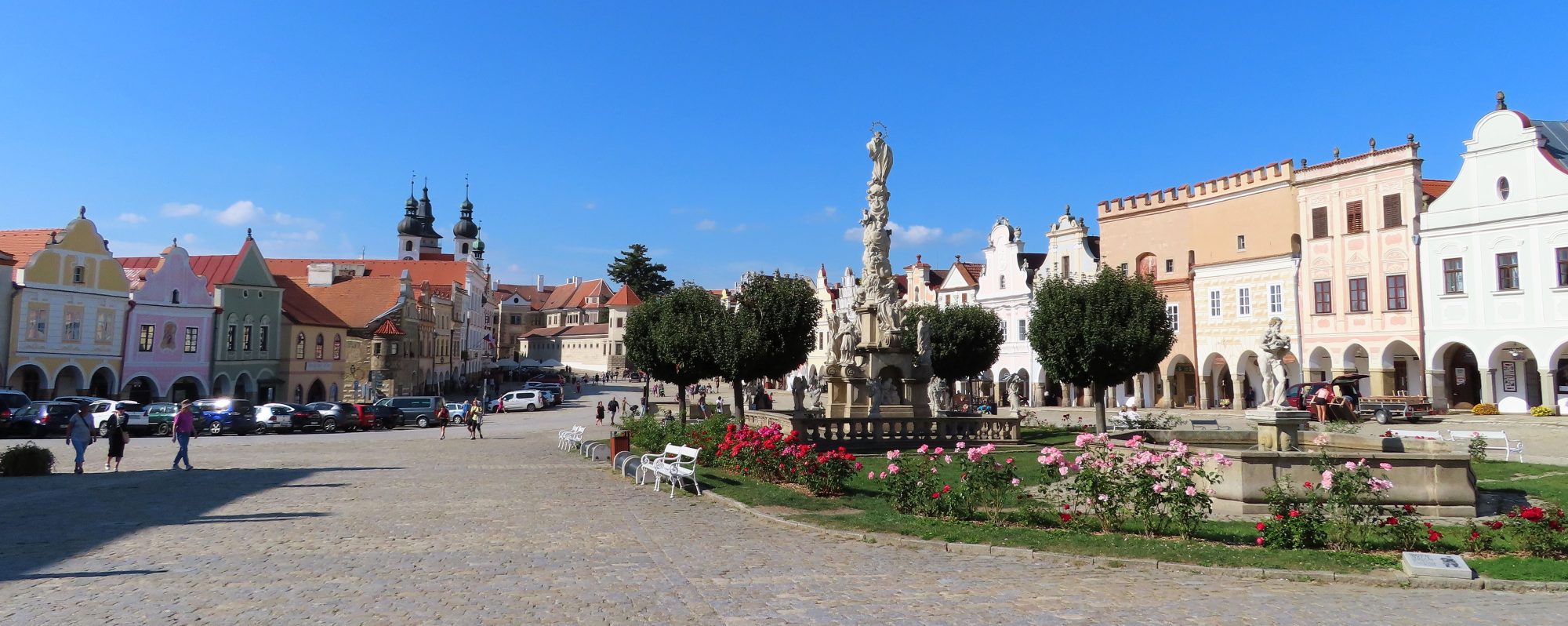

History Happens Here
Located in the western reaches of Bohemia, approximately 90 kilometres southwest of Prague, lies the city of Plzeň.
This is a city that has played a significant role not only in several national historic events, but also in a number of international ones. It is also the birthplace of two iconic Czech brands known worldwide: Pilsner Urquell and Škoda.
First mentioned historically in 976 and officially made a municipality in 1295, the city has served as a centre of business and trade from its earliest days. It was an important stop on the trade route linking Bohemia to Bavaria.
Plzeň was the nerve centre of Catholic anti-Hussite activity during the Hussite Wars, which lasted from 1419 to 1434. It was besieged three times during the Thirty Years’ War—successfully by German forces between 1618 and 1621, and unsuccessfully by the Swedish in 1637 and 1648.
The city experienced a surge in industry in the latter half of the 19th century, including the establishment of the Škoda Works in 1859. The company grew to become the country’s largest and most powerful engineering firm for many years.
The late 19th century also saw an influx of Jewish families, adding cultural richness alongside the city’s Czech and German residents.
While Plzeň itself was not part of the Sudetenland, it sat on the edge of the region and was strongly influenced by German culture. After the end of the First World War and the establishment of a free Czechoslovakia, there was a movement in the wider region to join Austria rather than remain in the new country. Despite being confirmed as part of Czechoslovakia, Germanic influences persisted and are still visible today, alongside Czech and Jewish ones. Perhaps the clearest sign is the continued international use of the old German spelling of the city’s name—“Pilsen.”
It doesn’t take long after arriving in Plzeň to realize this is a city that wears its history on its sleeve.
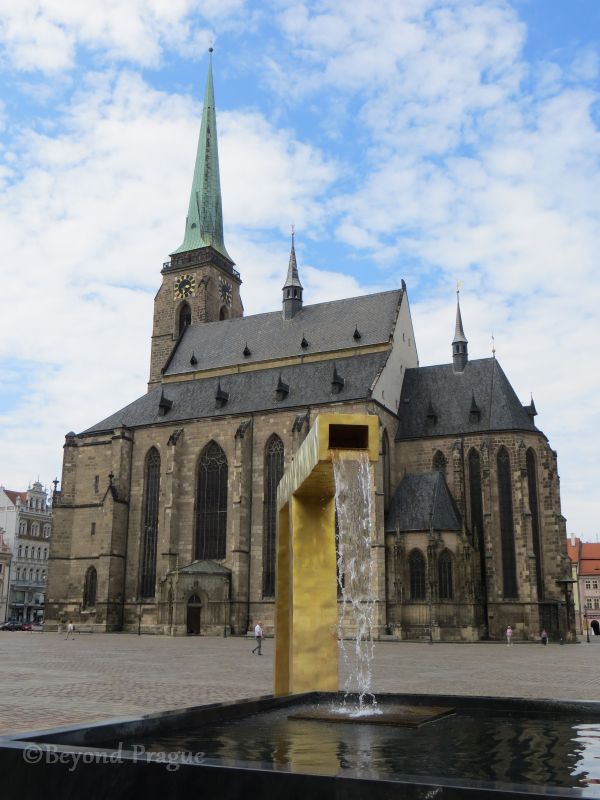
Architectural Abundance
If you’re a fan of architecture, Plzeň has much to offer. It’s easy to organize a self-guided tour of districts with notable buildings.
The centre of the city has been a cultural heritage preserve since 1989, and a host of architectural styles are visible both in the centre and beyond. Baroque, Classicist, Gothic, Modernist, Moorish Revival, Renaissance and others intermingle, giving Plzeň a unique architectural face.
A highlight is a series of restored Modernist interiors that wealthy industrialists of the interwar period commissioned from famed architect Adolf Loos (1870–1933). These interiors are notable for their spaciousness, a hallmark of Modernist style, and their use of high-quality materials such as exotic woods, fine stone, and glass.
If you wish to visit the Loos interiors, it’s best to book in advance, as tours are popular and fill up quickly. Tours also don’t run every day.
As many of Loos’s clients were from the city’s Jewish community, the interiors represent not only Modernist design but also the cultural influence of Jewish residents from the late 1800s until the Second World War.
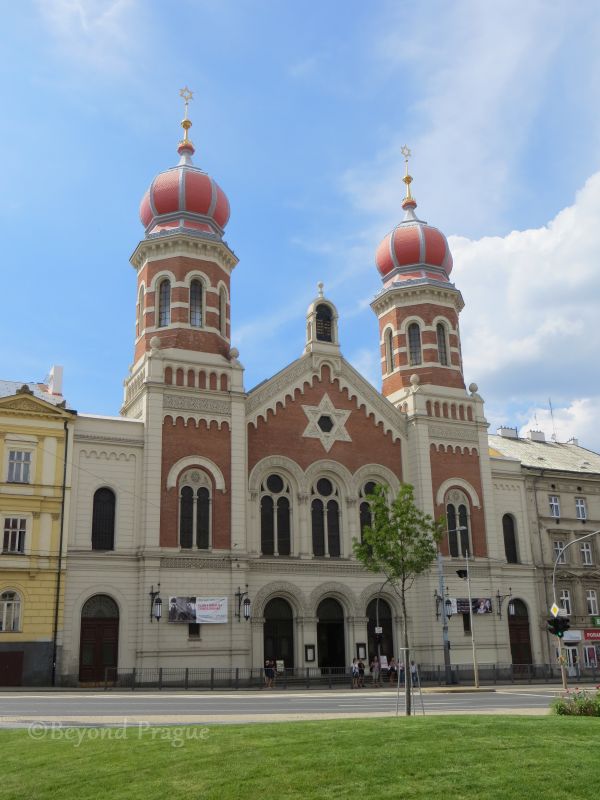
Beyond the Loos interiors, the Jewish presence gave the city two other architectural gems: the Old Synagogue and the Great Synagogue.
The Old Synagogue sits in the southwest corner of the centre, tucked away in a courtyard near Smetana Park. Visitors can see its interior as well as a unique monument to victims of the Holocaust.
On the western edge of the centre stands the monumental Great Synagogue, with its striking Moorish Revival facade and interiors. This is the largest synagogue in the country, the second largest in Europe, and the third largest in the world. Beyond being a stunning architectural attraction, it is the city’s most visible testament to the wealth and influence of its Jewish population before the Second World War.
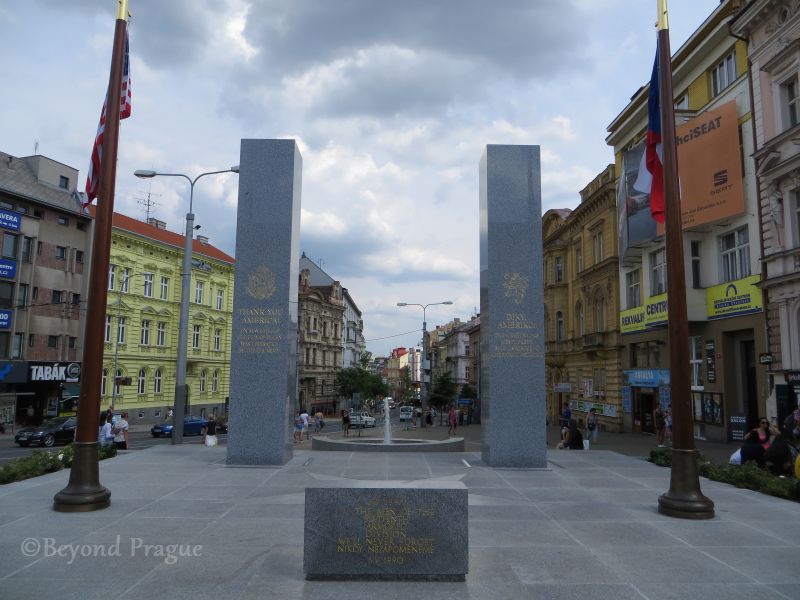
Thank You, America
A short walk from the Old Synagogue brings you to the monument honouring American army units that liberated the city in May 1945.
Plzeň continues to show gratitude through its annual Liberation Festival in May. The festival features a convoy of historic vehicles and many people dressed in period military uniforms. If military history is your interest, a May visit could be well worth your while.
The city also has a museum dedicated to General George Patton, who led the liberation.

A Pause for Thought
After a day of walking and taking in Plzeň’s attractions, you may want to slow down and reflect.
The city has several parks, but one is particularly special. On the southern edge lies the Meditation Garden, which includes a memorial to all victims of evil.
This beautifully landscaped and tranquil garden was the life’s work of Plzeň resident Luboš Hruška (1927–2007). A soldier, he was captured while trying to escape the newly Socialist Czechoslovakia in 1949 and sentenced to 18 years of hard labour.
Transferred through a number of prisons and labour camps before receiving an amnesty in 1960, Hruška resolved to transform a fruit orchard he inherited into a monument to all victims of tyranny. Upon release, he cleared the land and taught himself landscaping and plant care.
The garden now includes many plant species, a pilgrimage path with 12 unique sandstone sculptures, and a chapel. It can be reached by public transit and a short walk.

The Nation’s Beer Capital
Even though I’ve written a dedicated blog post about the legendary Pilsner Urquell brewery—a major tourism draw that I strongly recommend—there’s much more to Plzeň’s beer culture than this world-famous brand.
Beyond the brewery, you’ll find a beer museum in the old municipal brewery building in the city centre. There’s also no shortage of pubs offering a wide variety of brews. Definitely have the Pilsner Urquell experience while you’re here, but don’t limit yourself to just that.

Paying a Visit and Learning More
Overall, Plzeň has a relaxed atmosphere and doesn’t feel overly touristy. It offers a respectable range of accommodation and dining options for various tastes and budgets.
The main tourist information office is beside the town hall on Republic Square. It stocks a good range of souvenirs and brochures, and the staff are friendly and helpful.
While Plzeň is well connected by rail and bus to nearby towns, reaching it from farther afield can be time-consuming. Travelling by train from Brno took us about five and a half hours each way, including a transfer in Prague. The trip was worthwhile, but long relative to the actual distance. I’ve been told the drive takes nearly as long.
To get a fuller view of what the city offers, the official tourism website is an excellent starting point.
The independent Plzeň Guide website is also very useful.
If you’re an architecture fan, the Pilsen Architectural Manual website will help you discover points of interest and suggest self-guided tour routes.
 Beyond Prague