Baroque Pearl of Bohemia
Plasy is a small town in West Bohemia, situated roughly at the centre of a triangle formed by the cities of Karlovy Vary, Plzeň, and Prague.
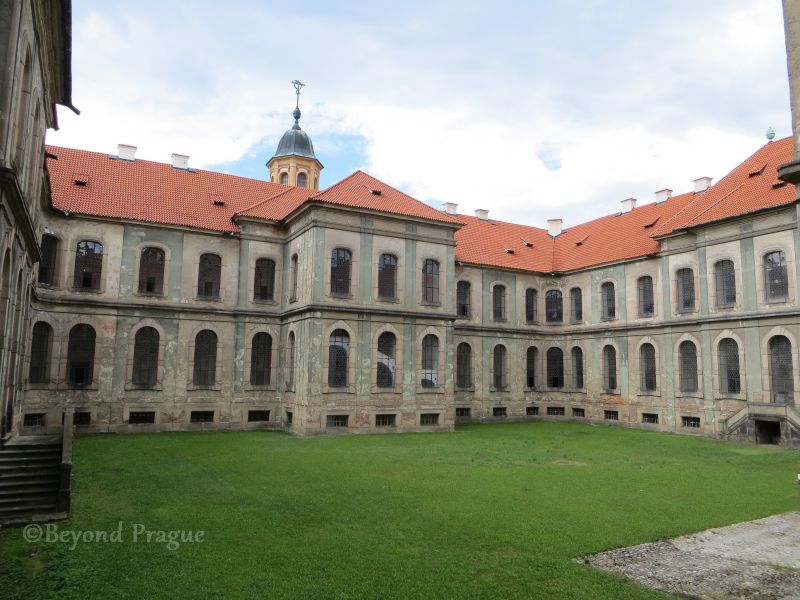
The centrepiece of the town is the expansive former Cistercian monastery located near the Střela River, which flows through the town. The monastery is considered one of the best-preserved Baroque structures in the Bohemian regions.
While the current appearance and layout of the monastery date largely to the 18th century, its history reaches back much further. The monastery at Plasy was originally established in 1144, though misfortune struck during the Hussite Wars, when it was burned to the ground in 1421.
Recovery for both the monastery and the surrounding community did not truly begin until after the Thirty Years’ War. From 1661, a steady program of rebuilding and expansion continued until the monastery was abolished in 1785.
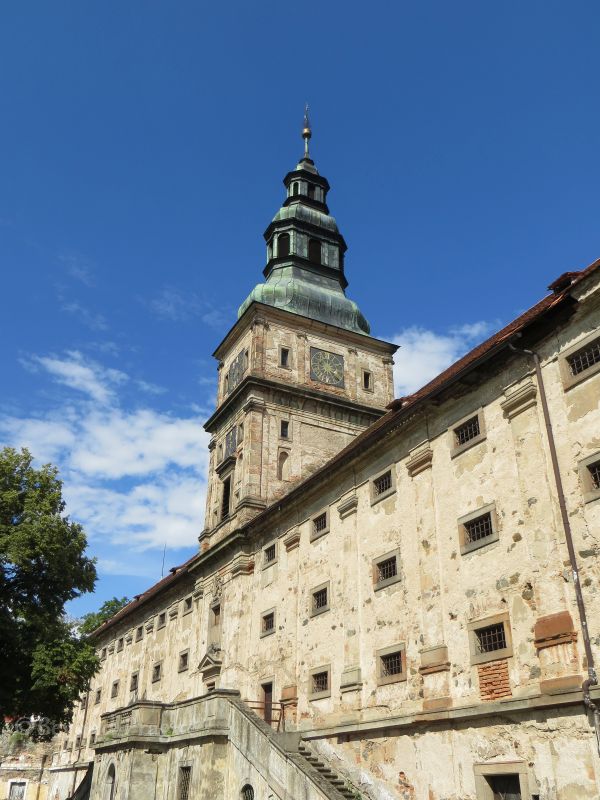
In 1826, Austrian Chancellor Klement Václav Lothar Metternich purchased the property to expand his holdings in the region. Under his ownership, the monastery’s prelature building was converted into a château for him and his family. Several other monastery buildings were also repurposed during Metternich’s tenure. This chapter of history ended in 1945, when the estate was seized and placed under state control.
During the 1950s and 1960s, the buildings were altered and further repurposed. Serious restoration work did not begin until the 1970s. In 1995, the monastery was declared a National Cultural Monument.
Today, restoration remains a work in progress. Much has already been achieved, however, and a number of buildings are open to the public for tours.
An Unconventional Convent
Of the eight buildings that make up the monastery site, the convent is truly the heart of the complex and the focus of the main guided tour.
Constructed between 1711 and 1740, the convent brought together many prominent Czech artists and craftsmen of the era. Among the most significant contributors was Jan Blažej Santini Aichel (1677–1723), a Czech architect of Italian descent renowned for his inventive interpretations of the Baroque Gothic style. Many of his works challenged conventions of the time while still retaining the defining features of the style.
One of Santini’s greatest challenges at Plasy was supporting the weight of the massive convent on the marshy soil of the Střela River floodplain. His solution was a deep foundation set on a system of wooden pilings. Approximately 5,100 oak pilings were driven into the ground and topped with an oak-beam grate. To this day, the convent stands on that foundation.

The pilings and grate remain fully submerged, invisible to visitors, but the convent tour includes two water-testing pools where water quality is checked several times daily. Santini also devised an underground system of canals and water pressure controls to ensure the foundation would remain submerged and resistant to rot, while offering some protection against flooding.
Santini Aichel also contributed a complex series of self supporting staircases and an intricate spiral staircase to the convent’s structure.
Beyond these engineering feats, Santini added a series of self-supporting staircases and a particularly intricate spiral staircase. He died before the convent was completed, but his work was carried forward by Kilián Ignác Dientzenhofer (1689–1751), who had studied under him.

Paintings and Plasy Powder
In addition to its architecture, the convent offers rich artistic and academic heritage.
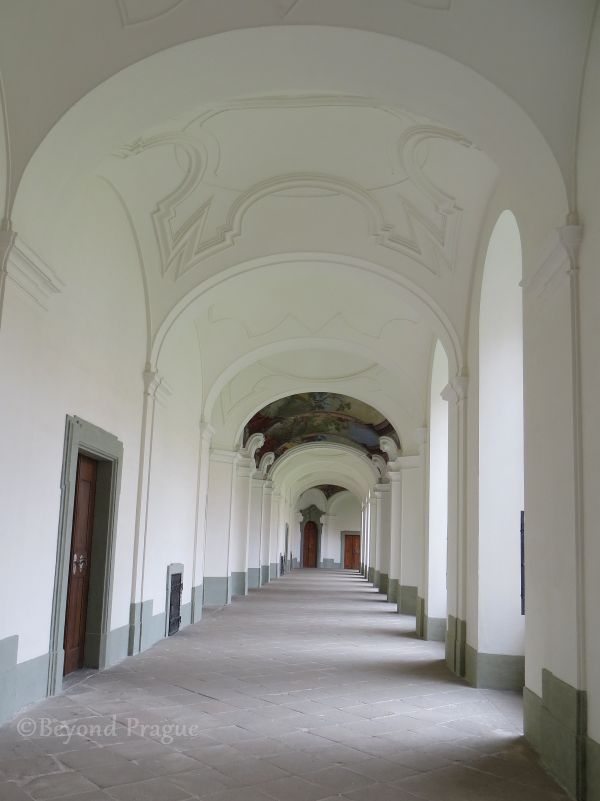
Visitors can admire frescoes on the ceilings of corridors and chapels, created by several leading painters of the day, including Petr Brandl (1668–1735) and Jakub Antonín Pink (1690–1748).
The convent also contains the winter refectory, the former monastery library and study hall, and the large Capitular Hall. This hall was historically used to welcome new monks and elect new abbots.
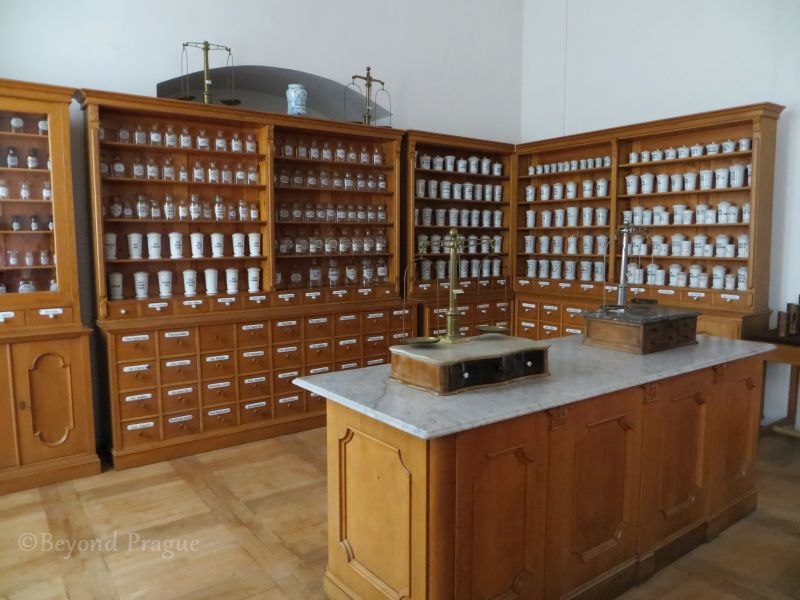
Plasy was also well regarded for its medical care, particularly its pharmacy. The monastery produced a highly sought-after stomach medicine known as Plasy Powder. Its recipe was kept a closely guarded secret, and protecting this valuable formula was very much in the monks’ interest.
Paying a Visit and Learning More
As mentioned, the convent is the focus of the main guided tour. As with many historic sites in the Czech Republic, tours are generally conducted in Czech, though texts in other languages are available to help non-Czech speakers follow along. Tours in English or German can also be arranged. The convent tour lasts about an hour.
It is possible to tour the clock tower building as well, though options there are more limited.
Plasy is easy to reach by road or rail from Plzeň, and the town is also a stop along several local cycling and walking trails.
If you plan to visit during the busy summer season, it’s worth having a snack beforehand or packing something with you. When we arrived around noon feeling a bit hungry, we found only two nearby restaurants — both popular and busy at lunchtime — and had to wait for seats to free up.
For details about tours, schedules, and access, visit the monastery’s official website.
 Beyond Prague