

A Holiday on the Rocks
During the third week of July, 2017, we explored the picturesque Český ráj (Bohemian Paradise) district in the northern reaches of the country.
Český ráj is the country’s oldest protected natural area, designated as such in 1955. In more recent years, it has gained broader recognition, joining the European Network of Geoparks (2005) and the UNESCO Global Geoparks list (2015).
Covering approximately 740 square kilometres, Český ráj is primarily located in North Bohemia, with smaller portions extending into Central and Eastern Bohemia. The landscape is defined by dramatic sandstone rock formations, caves, gorges, and extinct volcanoes.
Not only is it one of the most popular outdoor destinations in the Czech Republic, but it’s also of international significance to geologists, particularly for its insights into land formation dating back to the Mesozoic Era (252–66 million years ago).
As this post is intended to give you some idea for what you can accomplish in a week in Český ráj. I will be writing extended entries on some highlights later, you can view this as a chronological travelogue of how we approched exploring this incredible region.
At that, let’s go:
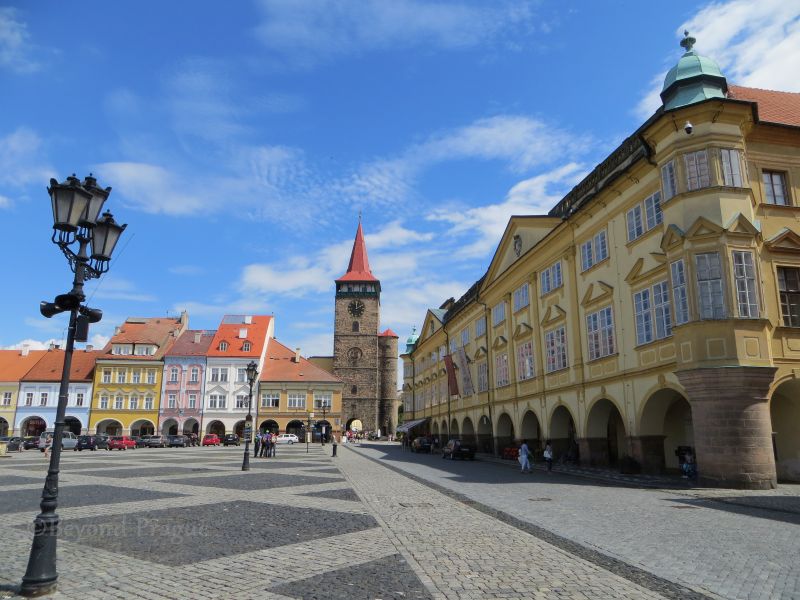
Day 1 – Jičín: The Gate to Paradise
Jičín, a small city on the southeastern edge of Český ráj, is one of several towns regarded as a “gateway” to the geopark.
We based ourselves here for the week, and it proved ideal—especially if you don’t have access to a car—as it’s well connected by bus and train. We arrived by rail from Brno, changing trains in Pardubice and Hradec Králové in both directions.
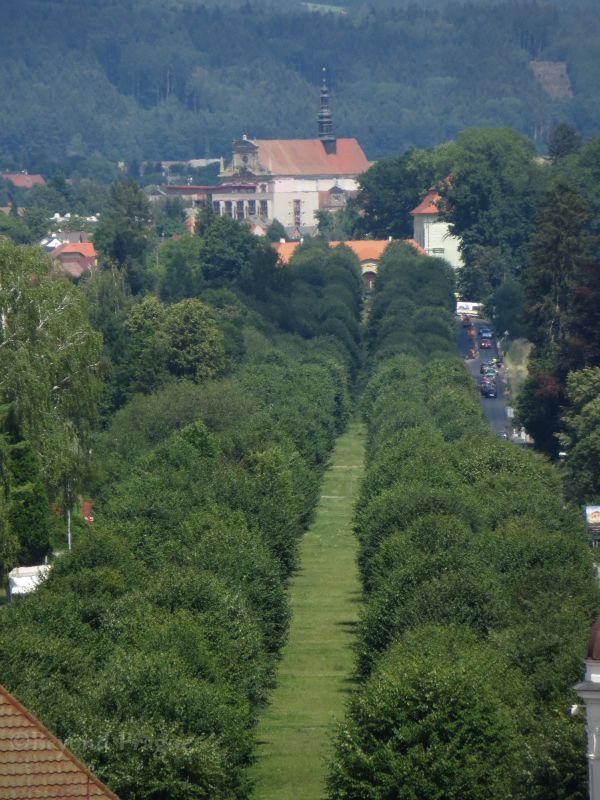
Jičín boasts strong historical ties to Czech nobility and has preserved much of its Baroque architecture and landscaping. From the arcaded town square, you can walk or cycle along a linden-tree alley leading to a noble estate featuring a loggia and landscaped park. This alley, lined with about 900 linden trees arranged in four rows, stretches over a kilometre and is reputed to be roughly 60 years older than the gardens of Versailles.
We found Jičín to be a pleasant and convenient base, though it’s worth noting that many shops and restaurants close between 7:30 and 8:00 p.m. on weekdays, with limited openings on Sundays.
For self-catering travellers, there are two well-stocked supermarkets within walking distance of the city centre. Pharmacies and sports shops also make it easy to stock up on sunscreen, insect repellent (including tick protection), and other essentials before heading into the wilds of Bohemian Paradise.
Day 2 – Prachovské Skály (Prachov Rocks)
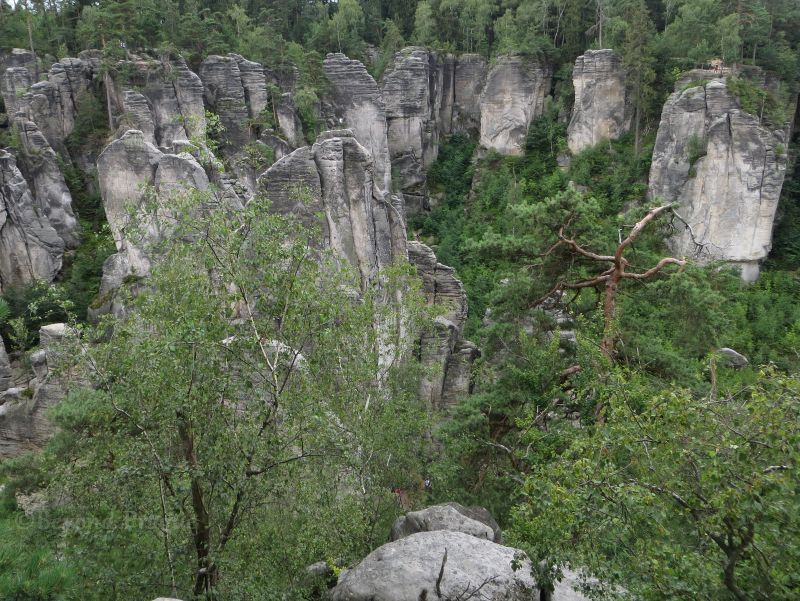
A short bus ride from Jičín brought us to the iconic Prachovské skály—the Prachov Rocks—where we truly began our adventure.
There are two main marked hiking routes:
- Short Route (yellow markers): Approximately 1.5 kilometres, with two viewpoints. Suitable for those wanting a brief introduction to the area without much physical exertion.
- Long Route (green markers): Around 3.5 kilometres, more demanding but offering eight viewpoints and a deeper exploration of the rock formations.
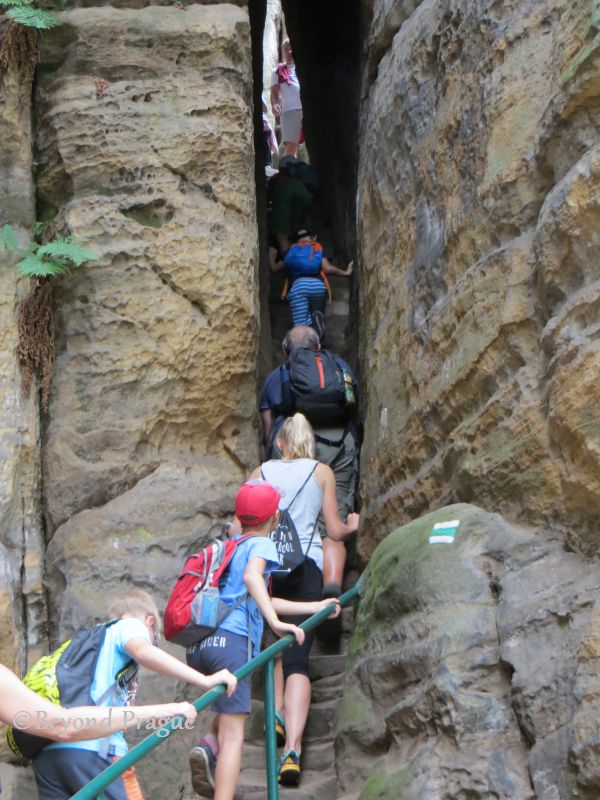
The routes intersect in places, allowing for a mixed approach, which we opted for. Our chosen path took us through gorges and narrow rock passages, leading to spectacular views.
I was struck by the contrast of towering sandstone formations surrounded by lush forest. In my part of Canada, similar geological features exist, but in much drier “Badlands” terrain with sparse, scrubby vegetation.
I strongly recommend wearing proper trekking shoes with good grip—the terrain is rugged and uneven. We saw people attempting the walk in sandals and were amazed they managed. A hat and tick-resistant insect repellent are also essential, as tick-borne encephalitis is a concern throughout Central Europe.
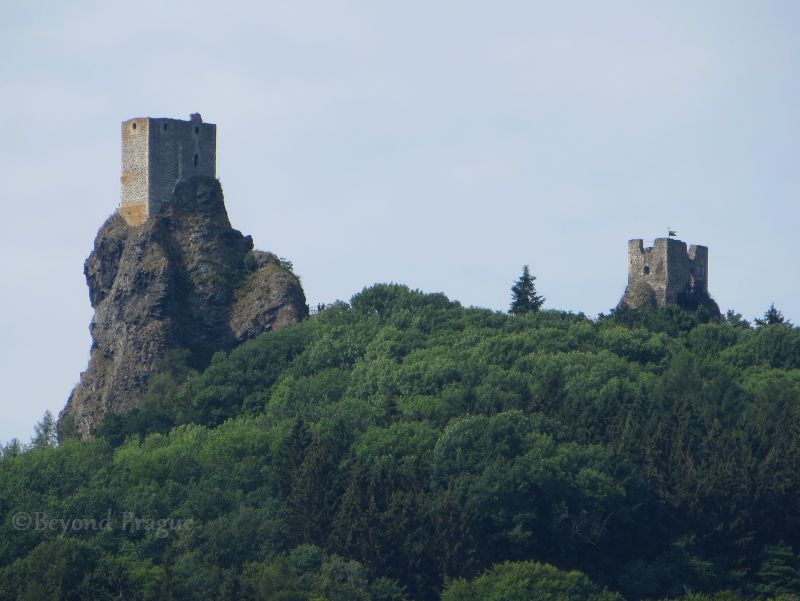
Day 3 – Hrad Trosky (Trosky Castle)
Few images are more emblematic of Český ráj than the twin towers of the ruined Trosky Castle. The 14th-century fortress, a veteran of the Hussite Wars and the Thirty Years’ War, was set ablaze in 1648 and left in ruins. Its iconic silhouette appears in many regional logos and promotional materials.
Trosky is not the easiest place to reach without a car, but the panoramic views from the towers make the effort worthwhile. Several marked hiking trails lead to the castle—it’s worth contacting the Český ráj tourist office to assess which are most suitable for your fitness level.
We took a train from Jičín to the village of Ktová and followed a trail from there. The hike proved significantly more challenging than online descriptions suggested—steep inclines and overgrown sections made it tough going. Fortunately, a couple of restaurants near the castle provided a welcome rest before we explored the site.
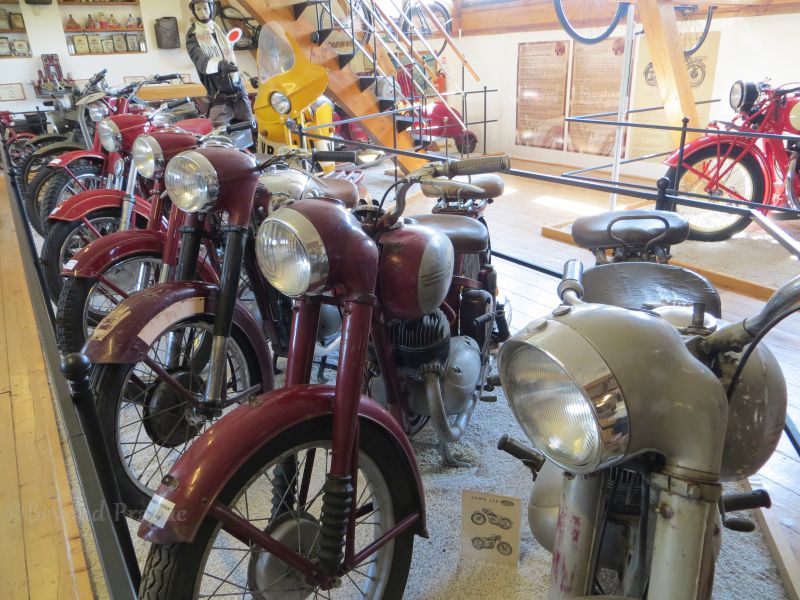
Detour – Motomuzeum at Borek
Rather than retracing our steps, we decided over lunch to head toward Borek pod Troskami to catch a train back to Jičín.
As luck would have it, a taxi pulled up outside the restaurant just as we were leaving. We negotiated a ride, saving time and energy.
Thanks to this, we had time to visit the Motomuzeum near the Borek train station. This small but excellent museum showcases vintage motorcycles across three floors, primarily from Czech manufacturers such as ČZ, Jawa, and Praga, along with a few international models. An unexpected and welcome end to a busy day.
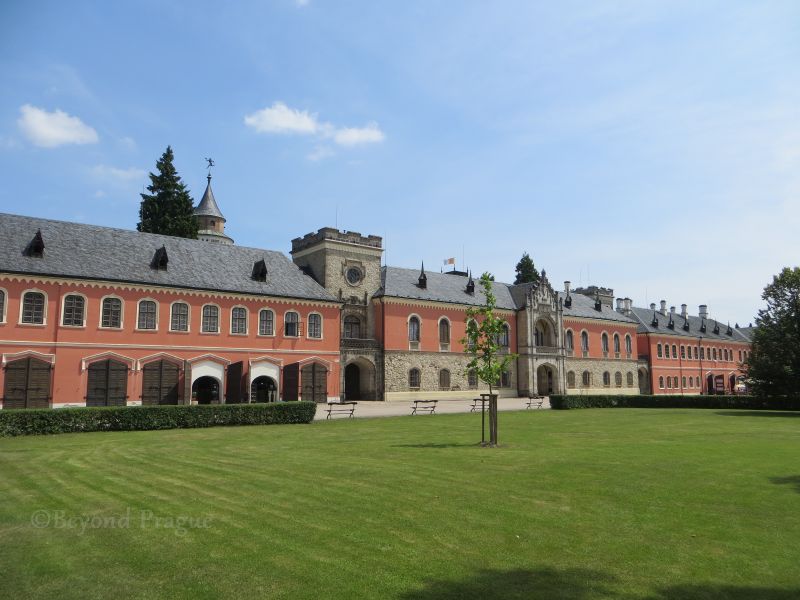
Day 4 – Sychrov Chateau
After two days of trekking over rocks and other manner of uneven surfaces, it was time for a day on level ground.
A train journey took us west to Sychrov Chateau. We had visited it once before, in 2006, and were happy to return. With its pink facades, Neo-Gothic design, and English-style gardens, Sychrov stands apart from many other Czech chateaus.
Its distinctive character comes from the Rohan family—a French aristocratic lineage exiled during the Revolution—who purchased the estate in 1820. Today, Sychrov holds the largest collection of French portrait art outside France.
The chateau is accessible by train from Jičín via Turnov, followed by a walk along a marked trail from the Sychrov station.
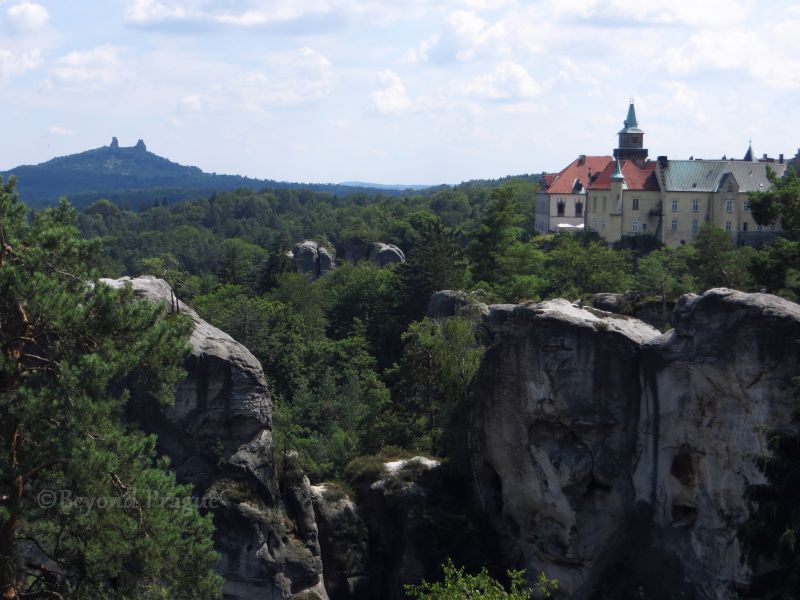
Day 5 – Hrubá Skála
Located near Trosky Castle, Hrubá Skála is another popular destination within the geopark. It offers towering sandstone cliffs, extensive hiking trails, and sweeping views.
Despite its proximity to Jičín, the winding roads made the bus ride longer and slightly nerve-wracking. Upon arrival at the chateau hotel, a cluster of souvenir and food stands confirmed its tourist-friendly nature.
Before trekking through the rocks, we took lunch at the hotel restaurant. A fortress or chateau has stood on this site since the 14th century. Following the Second World War, it was seized by the state and, under the Communist regime, used as a recreational retreat, with its interiors significantly altered. Today, it operates as a luxury hotel.
The views from the area are stunning. Trosky Castle, 4 kilometres to the southeast, is a prominent landmark, while Ještěd Peak near Liberec—roughly 25 kilometers to the north west—is visible from some viewpoints.
As with Prachovské skály, sturdy footwear and tick-repellent are essential.

Day 6 – Kost Castle
A short bus ride from Jičín took us to Kost Castle—one of the best-preserved and most visited castles in the Czech Republic.
Kost sets itself apart from many other Czech castles in three key ways:
- Location: Unlike most castles perched atop hills, Kost sits at the bottom of a valley. Visitors descend to reach it.
- Ownership: Kost is not state-owned; it has been reclaimed by the Kinský family, its historical owners.
- Architecture: Unlike many castles converted into chateaus or left in ruin, Kost remains a genuine Medieval fortress, minimally altered over time.
During our visit, the castle was hosting a Medieval festival, adding a layer of liveliness and colour to the experience.
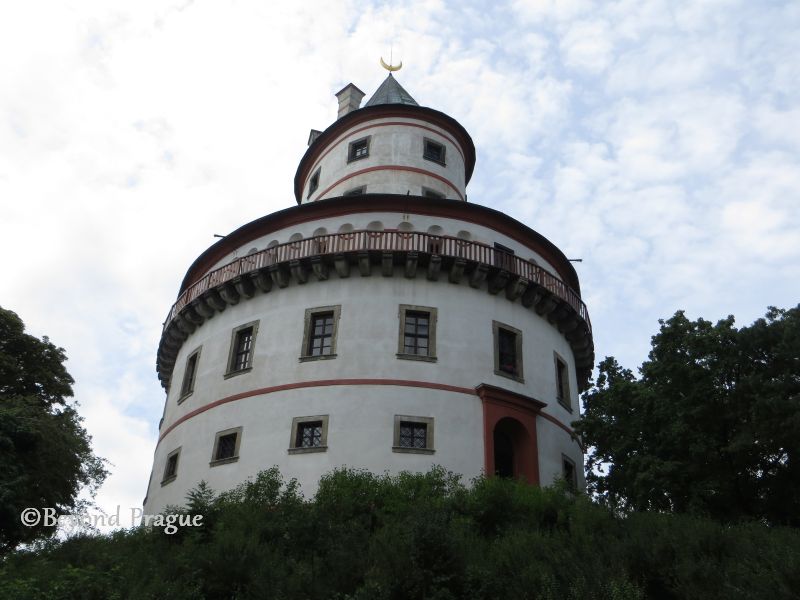
Day 7 – Humprecht Chateau
On our final day, we boarded a bus to the small town of Sobotka to visit Humprecht Chateau, located about half a kilometre from the town centre.
A short, well-marked trail leads to the chateau, built in the late 17th century by Count Humprecht Jan Černín of Chudenice as a hunting lodge and summer retreat. Its elliptical shape and Mannerist style are the work of architect Carlo Lurago, reflecting the transition between Renaissance and Baroque design.
I was pleasantly surprised by the visit. Online information had been sparse, and the exterior photos made it seem underwhelming. In reality, it’s a gem.
The main hall has remarkable acoustics and is sometimes used to host small concerts. Our tour guide gave us a small demonstration of the acoustics with a flute performance.
The 27 rooms viewable on the tour are beautifully presented.
Paying a Visit and Learning More
As mentioned earlier, I’ll be expanding on several of these experiences in future posts.
Český ráj offers far more than can be covered in a single week. With more time—and energy—you could easily double the length of your stay and still not run out of things to see or do.
Visit the Český ráj official website to start planning your own adventure in Bohemian Paradise. The site is all in Czech, but it responds well to online translator functions.
 Beyond Prague