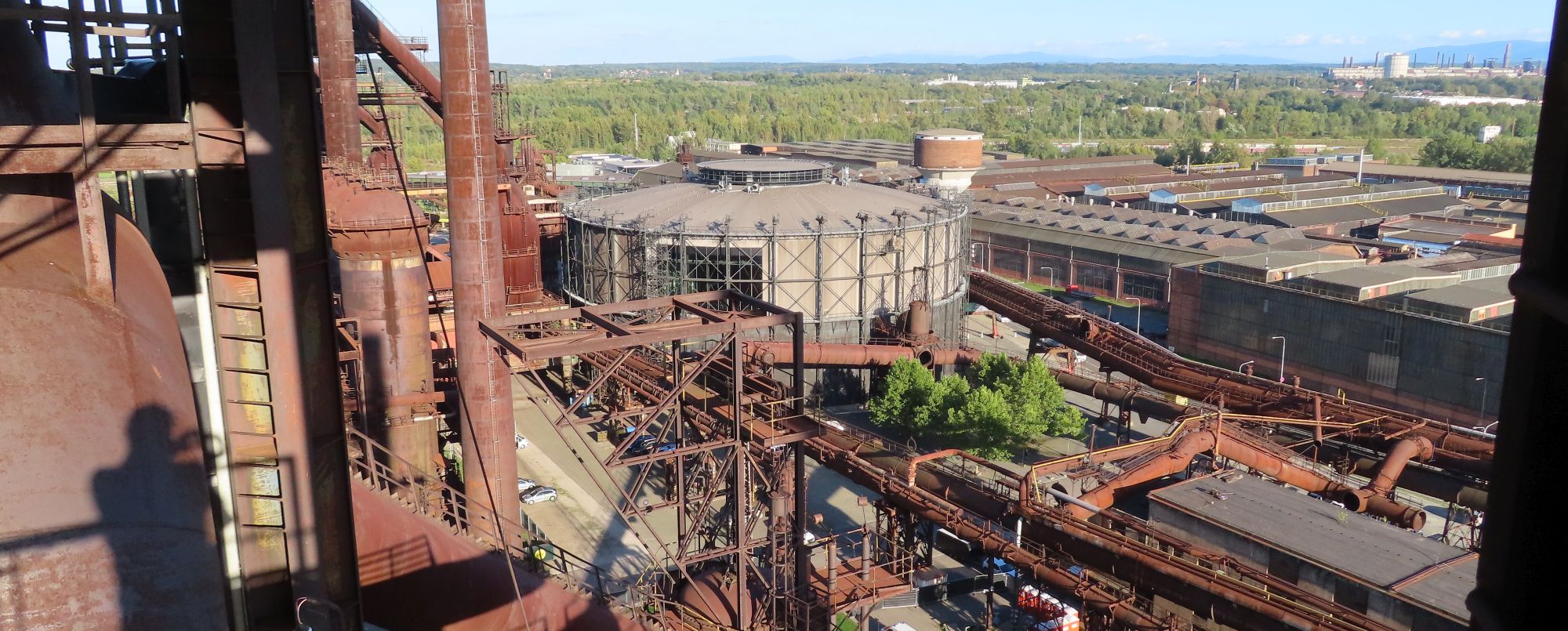

A week in the Heart of East Bohemia
Hradecko is part of the Královéhradecký region, which occupies the north-central part of the country. The region’s geography varies from lowlands in the south to the Krkonoše and Orlické mountain ranges that form part of the Czech–Polish border.
Both the region and the area of Hradecko take their names from the main city, Hradec Králové, in the south-central part of the region.
In July 2024, we spent a week in Hradecko, using Hradec Králové as our base. It worked quite well for the purpose. We travelled there by train from Brno, which required only a single connection at Pardubice.
This travelogue will give you a taste of what you can do in a week in Hradecko.
Day One – Kuks Hospital
Our first full day in the region began with a short train trip north of Hradec Králové to the village of Kuks.
The main attraction in Kuks is a former hospital dating to the early 1700s, considered an excellent example of Baroque architecture in the country.
Before purchasing tickets for a guided tour, we enjoyed a walk through the well-kept medicinal herb garden behind the hospital.
We chose the basic tour, which lasts about 60 minutes. It gave us an overview of the hospital’s history, its former Austrian noble owners, and the Hospitaller order that operated it.
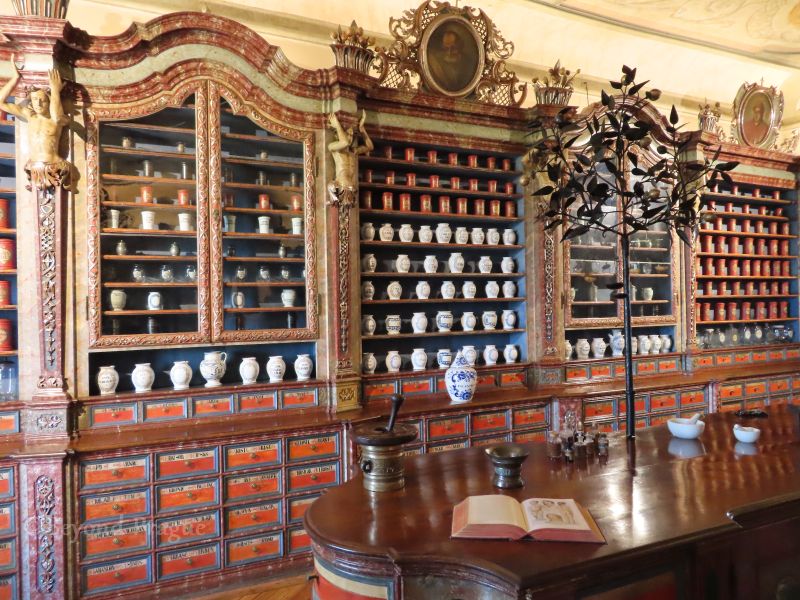
The tour also included an exhibit of a Baroque-era pharmacy and a visit to the hospital’s lapidarium, where allegorical statues representing human vices and virtues are displayed.
Day Two – Opočno Chateau
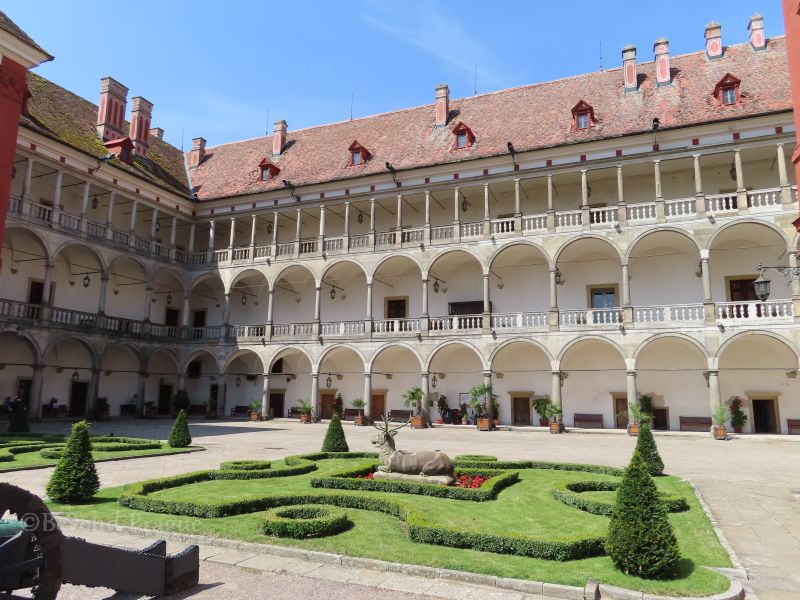
Shifting from Baroque to Renaissance, our second day in Hradecko took us by bus to the town of Opočno to visit its chateau.
The current face of the Chateau and its surrounding gardens dates to the late 1800s and early 1900s.
Two standard tours are offered, both focusing on the chateau’s last noble owners, the Colloredo-Mannsfeld family.
We opted for the basic tour, which lasts about 60 minutes and shows rooms on the first floor, including the library, dining room, and representative salon.
After the tour, we had lunch at a nearby restaurant before returning to Hradec Králové.

Day Three – Dvůr Králové nad Labem
Dvůr Králové, a small city north of Hradec Králové, was our destination on the third day of our trip.
The city’s main claim to fame is its Safari Park, the largest zoo in the country and one that enjoys international recognition.
However, we were not there for the animals. We came for a touch of Christmas in July.
Czech glass Christmas ornaments have a long tradition and are exported worldwide. Dvůr Králové is one of the places where you can watch the entire process.
Vánoční Ozdoby, which has been making glass ornaments since 1931, offers factory tours. We saw every step of the process—from blowing the basic glass shape, silver coating, and external painting to the finished ornament.
After the tour, we treated ourselves to a couple of ornaments from the factory shop.

Salon of the Republic
After lunch, we returned to Hradec Králové, where I took a walk around the city to enjoy its varied architecture.
In the 1920s and 1930s, the city was nicknamed the “Salon of the Republic” for its architectural diversity.
Hradec Králové has its share of Gothic, Renaissance, and Baroque buildings. At the same time, it also boasts a striking selection of more modern architectural styles.
One standout you can’t miss is the imposing East Bohemian Museum, built between 1909 and 1912. It sits directly across the street from the city’s tourist information office.

Day Four – Hradec Králové
We dedicated the fourth day of our trip to exploring Hradec Králové itself.
We began with a visit to the Obří Akvárium (Giant Aquarium), which showcases tropical freshwater fish species and plants from Central and South America.
The top floor represents a rainforest environment, from which you can look down into the main enclosure before descending to meet the fish face to face.
The main tank holds 130,000 litres, and we felt properly submerged as we walked through a tunnel that allowed us to observe the fish at their level.
Before moving on, we enjoyed homemade lemonade in the aquarium’s small café.
Afterwards, we headed to the main square for lunch and then down to the Labe (Elbe) River, which runs through the city, for a short river cruise.

The river cruise took us under some of the bridges that are near the historic centre of the city, each one has its own architectural style.
The cruise took us beneath several bridges near the historic centre, each with its own architectural style, and past the Hučák hydroelectric station, an Art Nouveau landmark that looks impressive from both water and land.
On our way back to the hotel, we passed through Masaryk Square, dating to the 1920s and an excellent example of Modernist architecture.

Day Five – Hrádek u Nechanic
On our last full day in Hradecko, we took a bus west of Hradec Králové to see the Tudor-style chateau near Nechanice.
This chateau is relatively young and unique among Czech chateaus, as it dates only to the mid-1800s and was not converted from an existing structure.
That does nothing to diminish its grandeur—it is every bit as impressive as others that are centuries older.
Of the four tours available, we again chose the basic option. Lasting about 45 minutes, it focused on the Harrach family, the chateau’s only noble owners, and included the games room, library, and chapel.
Time to go Home
After returning to Hradec Králové from Hrádek u Nechanic, I took one last walk around the city centre.
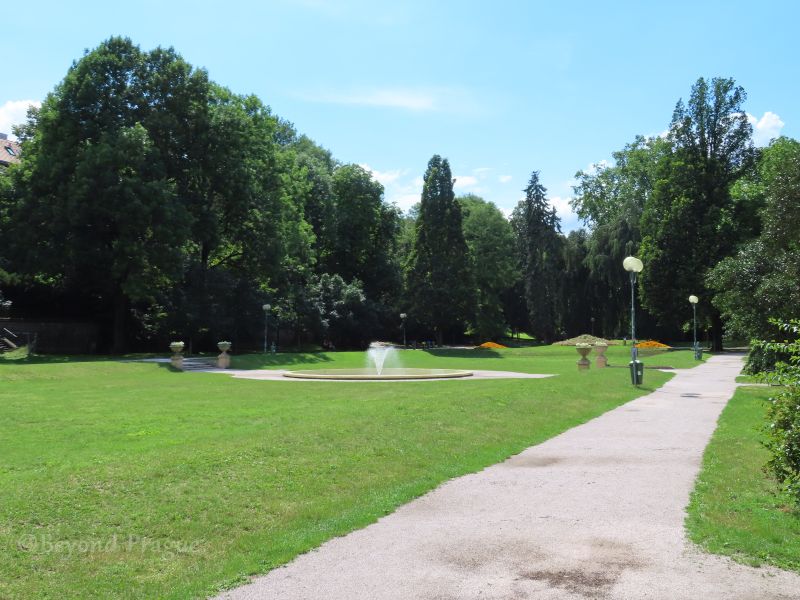
The brochures that had guided me through the city’s architecture also pointed me toward its greenspaces.
Two excellent examples are Žižka Park and Jirásek Park, both directly connected to the historic centre and perfect for resting your legs after a day of sightseeing.
If you’d like to learn more about what you can do in Hradecko, visit the region’s official website.
You can also follow this link to explore the wider Královéhradecký region. The website is multilingual, available in Czech, Dutch, English, German, Polish, and Russian.
 Beyond Prague