Northern Nerve Centre
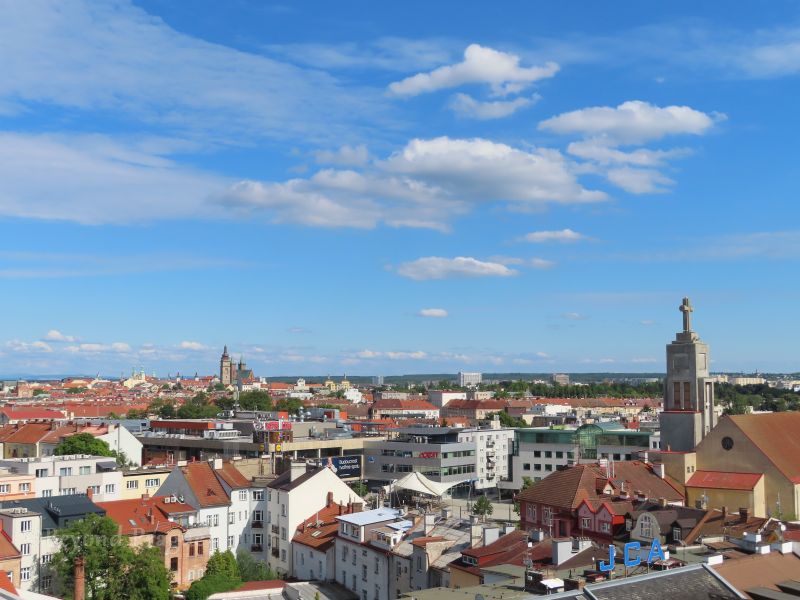
Hradec Králové is a city in the north-central part of the country and the main city of the Hradec Králové region, which stretches from just south of the city to the Polish border.
Aside from being an administrative centre, Hradec Králové is also a university town. The city has its own university and hosts two faculties of Prague’s Charles University as well as a faculty of Brno’s University of Defence.
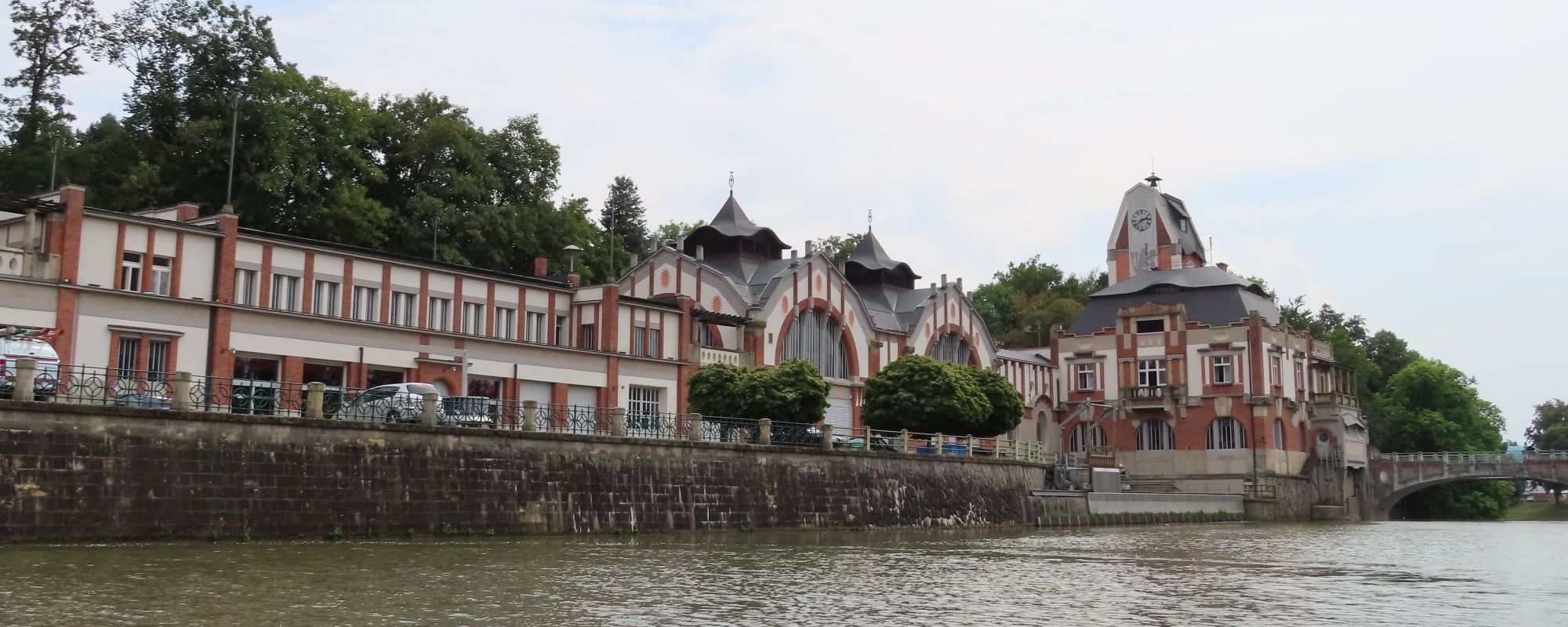
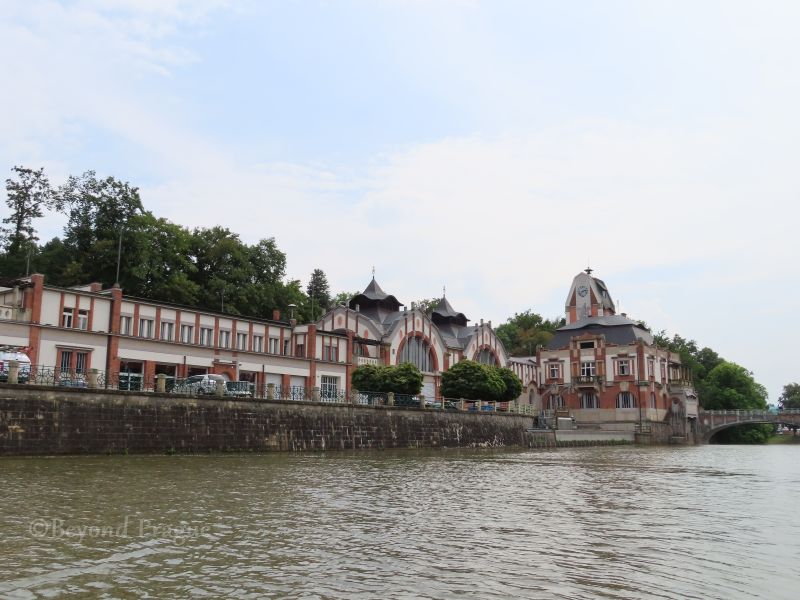
Where the city truly shines for visitors is in its remarkable array of architecture, particularly its Modernist styles. While there are gems of Baroque, Gothic, and Renaissance heritage, it is the structures from the late 19th and early 20th centuries that really stand out.
Let’s spend some time in Hradec Králové:

A Bit of History
The first written record of a settlement at the confluence of the Elbe and Orlice rivers dates to the 1220s, when it was simply known as Hradec.
By the 14th century, the town held great significance in the Kingdom of Bohemia, largely because it was designated a dowry town, granted by Bohemian kings to their wives to oversee.
It was during this period that the city’s name changed to Hradec Králové. The name combines Hradec (a diminutive form of hrad, or “castle”) with a grammatical form of králová (“queen”). The result translates to Queen’s Castle.
Among the most notable queens to govern the city were Elizabeth Richeza of Poland (1288–1335), wife of King Wenceslaus II, and Elizabeth of Pomerania (c. 1347–1393), wife of King Charles IV.
The queens left a strong imprint on the city, raising its status as an administrative, cultural, and educational centre. Its strategic location also gave it growing importance in military affairs.
During the Hussite Wars (1419–1434), Hradec Králové was captured in 1420 by Hussite forces. One consequence was the complete destruction of the castle where the queens had once lived.
In the aftermath, the city prospered once again under King George of Poděbrady (1420–1471). Ruling from 1458, George was both a Hussite and a tolerant monarch who maintained peace between Catholics and Protestants during an era of deep religious division.
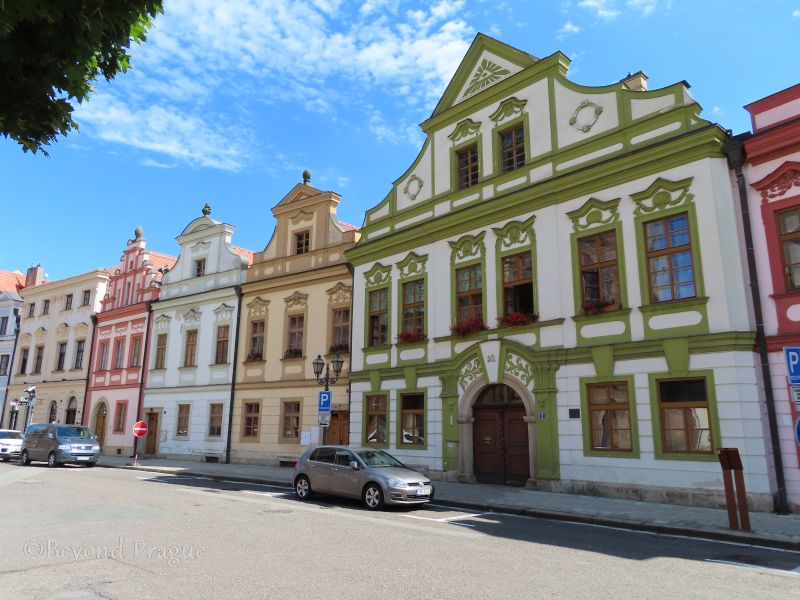
Toward the end of the 16th century, many houses and buildings were rebuilt in the Renaissance style.
The city’s strategic location drew conflict once again during the Thirty Years’ War (1618–1648). Hradec Králové suffered greatly and was nearly wiped from the map by repeated sieges. Yet it rebounded, with much of the rebuilding in Baroque style.
Another transformation came when Emperor Joseph II ordered the construction of a military fortress in the late 1700s. State-of-the-art at the time, the fortress was never used in battle and was officially decommissioned in 1884. Demolition began in 1893.
In 1884, an initiative was launched to reshape the city’s future. An international competition called for an ambitious urban plan stipulating that all new construction must employ modern methods and styles. Even before the First World War, the first buildings of this new vision were already taking shape.
The Salon of the Republic
From the late 1800s onward, the city’s architectural landscape changed dramatically.
The Art Nouveau movement left its mark in the years just before the First World War. After the war, Modernist architecture swept across Europe, and the newly independent Czechoslovakia was at the forefront of the trend. Czech architects were often leaders of the movement.
Among them were Jan Kotěra (1871–1924) and his protégé, Josef Gočár (1880–1945), both of whom played a central role in Hradec Králové’s transformation.
Kotěra, influenced early by Art Nouveau and the Vienna Secession, transitioned into Modernist design in the early 1900s. A prime example of his work is the Museum of Eastern Bohemia. It is a building you cannot miss on a visit to the city—not only for its size, but also because it sits directly across from the tourist information office.
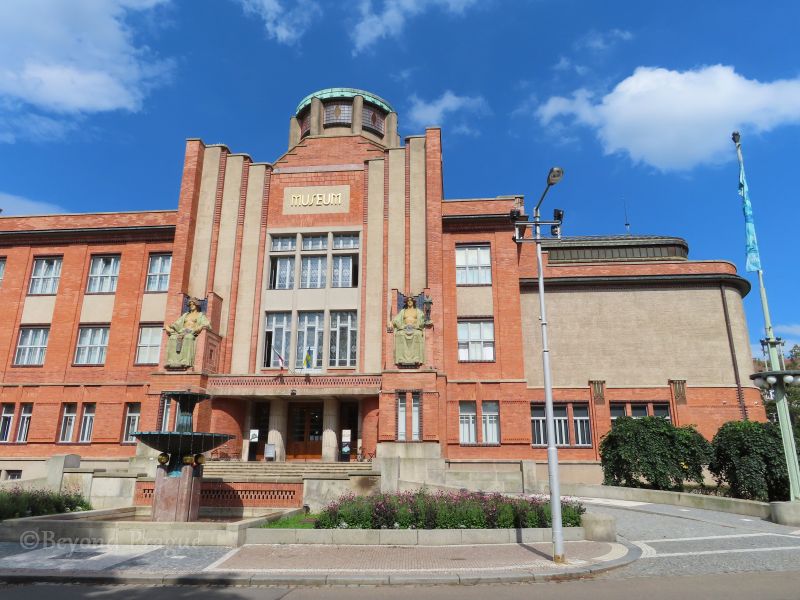
The museum blends elements of Art Nouveau and Modernism, serving as a transitional piece between the two styles. Kotěra is often considered the father of Czech Modernist architecture, though some debate the title. What is unquestionable is the influence he had on generations of architects.
One of them was Josef Gočár. Of all the architects who shaped the modern city, Gočár was among the most important. His imprint can be seen on Masaryk Square, a triangular plaza where his design of the imposing Anglobanka building dominates one end.

Gočár also made his mark internationally. One of his crowning achievements was the Czechoslovak Pavilion at the 1925 International Exhibition of Modern Decorative and Industrial Arts in Paris, for which he won the grand prize.
Kotěra and Gočár were not alone in defining the city’s modern face. Many contemporaries and followers added to its distinctive look.
During the First Republic period (1918–1938), Hradec Králové became widely known as the Salon of the Republic for its wealth of innovative architecture. The reputation drew admiration from abroad, with many foreign architects visiting to see its urban planning first-hand.

A Feel for the Place
As a university town, Hradec Králové has a relaxed and youthful vibe. At the same time, as a major regional employer, it also has a strong working-class character.
The historic centre and its immediate surroundings are very walkable, and the city boasts an efficient public transport system of buses and trolleybuses to take you further afield.
Parks and green spaces are plentiful, offering pleasant places to rest and recharge.
The city provides all the amenities one would expect of its size. Accommodation and dining options cater to a variety of tastes and budgets, while shopping centres and supermarkets make self-catering convenient.
Well connected by rail and bus, Hradec Králové can also serve as an excellent base for exploring nearby chateaus and points of interest.
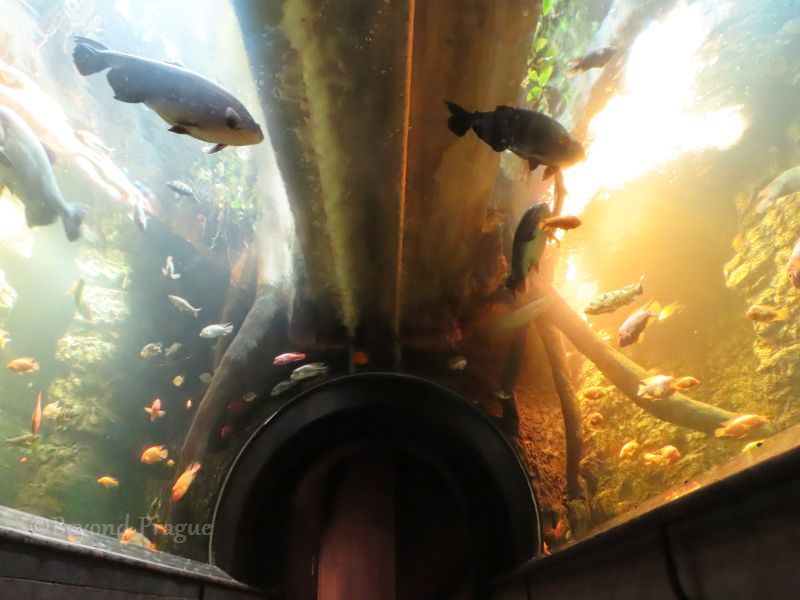
Beyond architecture, visitors can enjoy attractions such as the Obří Akvárium, the largest freshwater aquarium in the Czech Republic. Specializing in species from Central and South America, its main tank holds 130,000 litres of water.
Music lovers may want to visit the Petrof Museum, dedicated to the world-renowned piano maker founded in the city in 1864 and still based there today. Visits require advance booking, available via the bilingual Czech–English website.

Paying a Visit and Learning More
As noted, Hradec Králové is well served by both rail and bus. While some direct trains run from Prague, most routes from elsewhere in the country require a transfer in Pardubice. This is hardly an inconvenience: Pardubice is a major rail hub, and its station is easy to navigate.
Do note, however, the strong civic rivalry between Hradec Králové and Pardubice—so it’s best not to praise one city too much while visiting the other!
To learn more about what to see and do in Hradec Králové, the city’s official tourism portal is a great place to start.
If architecture is a special interest, the city’s architectonic manual website offers detailed information on its buildings, the architects behind them, and suggested walking routes to experience it all.
 Beyond Prague