
In the Heart of South Bohemia
Serving as the capital of South Bohemia, České Budějovice is best known outside the Czech Republic for being the birthplace of Budvar, the original Czech lager behind the name Budweiser in Europe, although it’s distinct from the American brand. While you can visit the brewery and sample the product, there is much more to this city than that.
České Budějovice is an important city historically that has maintained its relevance into the present. Established in 1265 as a royal city to enable King Přemysl Otakar II to project his power into the region, it was fortified and played strategic roles in both the Hussite Wars and the Thirty Years’ War.
From an early stage, the city flourished as a commercial, cultural and political hub for the region. It built its wealth through mining local silver deposits, fish farming, salt trade, brewing, and transport. Its location on the Vltava and Malše rivers made it important for boat traffic. In the early to mid-1800s, it became part of one of
the first horse-drawn railways on continental Europe, with a line connecting it to Linz, Austria.
Today, the city remains a key transport hub and an important centre for beer production. It’s home not only to the renowned Budweiser Budvar brewery but also to the Samson brewery. Manufacturing is another cornerstone of the local economy; a notable company both historically and today is Koh-I-Noor Hardtmuth, one of the world’s oldest manufacturers of art and office supplies.
České Budějovice is also a centre for education, home to the University of South Bohemia and the Institute of Technology and Economics.České Budějovice is also a centre for education, being the home of the University of South Bohemia and the Institute of Technology and Economics.
Let’s spend some time in České Budějovice:

Being in “Budějce”
Known locally as “Budějce,” the city offers a great blend of historic and contemporary character, combining urban development with abundant greenspace.
While it’s not without attractions of its own, České Budějovice is first and foremost a working city and a university town. It’s not particularly touristy—a fact many consider part of its charm, and I certainly wouldn’t argue with that.
In fact, with several high-traffic tourist attractions nearby , České Budějovice doesn’t need to be touristy itself. Using the city as your base while exploring the region works wonderfully. You’ll appreciate the relaxed pace and elbow room the city offers.
After spending a day at the more heavily visited Hluboká Chateau or the town of Český Krumlov, returning to the quieter environs of České Budějovice is a great way to decompress.
The city boasts many restaurants and pubs, several of which offer outdoor seating in the spring and summer months. Dining in one of the restaurants on the main square on a clear summer evening, with the warm glow of the setting sun illuminating historic buildings, is a truly peaceful experience.
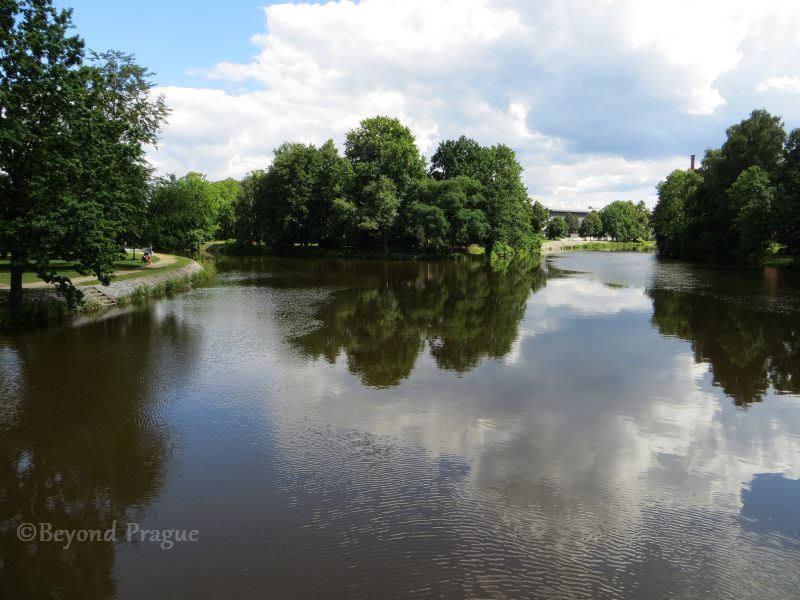
Directly west of the city’s historic centre, you’ll find the confluence of the Vltava and Malše rivers, with Stromovka Park just beyond. This area is perfect for leisurely walks in green surroundings after a day of sightseeing.
What to do Here
České Budějovice can be enjoyed in many ways, depending on the length of your stay and your interests.
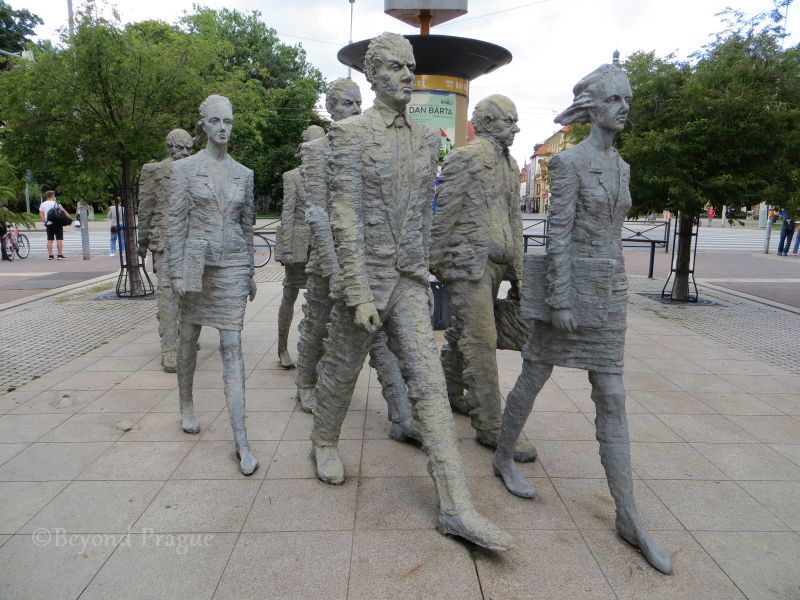
If you arrive by rail or bus, a great way to introduce yourself to “Budějce” is to stroll toward the historic centre along Lannova třída—the pedestrian shopping and business district near the train and bus stations that leads directly into the heart of the city. At the end of the street nearest the centre, you’ll encounter the striking Humanoids sculpture by locally born artist Michal Trpák, depicting a group of businesspeople on their way to work—a glimpse into the city’s contemporary artistic side.
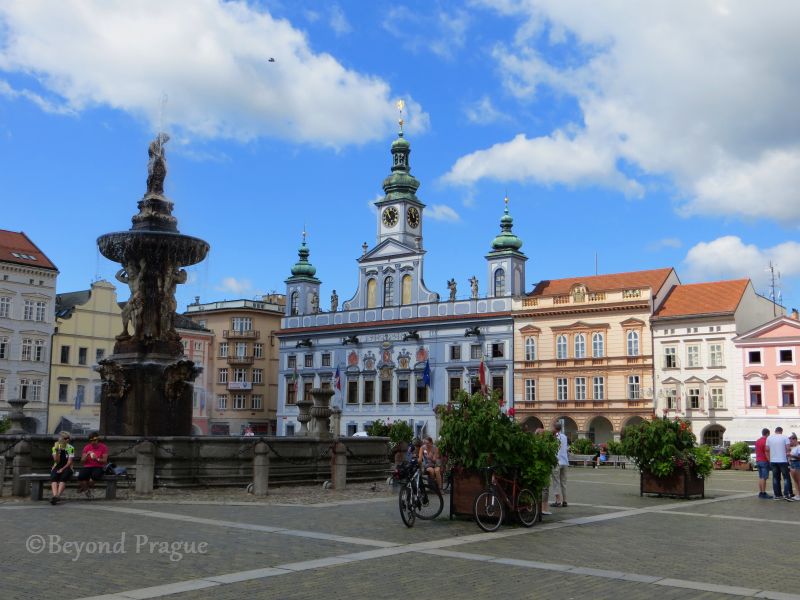
The historic centre, a protected urban area, offers history buffs and architecture enthusiasts a wealth of Gothic, Renaissance and Baroque style structures to explore. Sections of the old city walls still stand. The centrepiece is the beautiful arcaded Přemysl Otakar II Square, with the Samson Fountain at its heart.
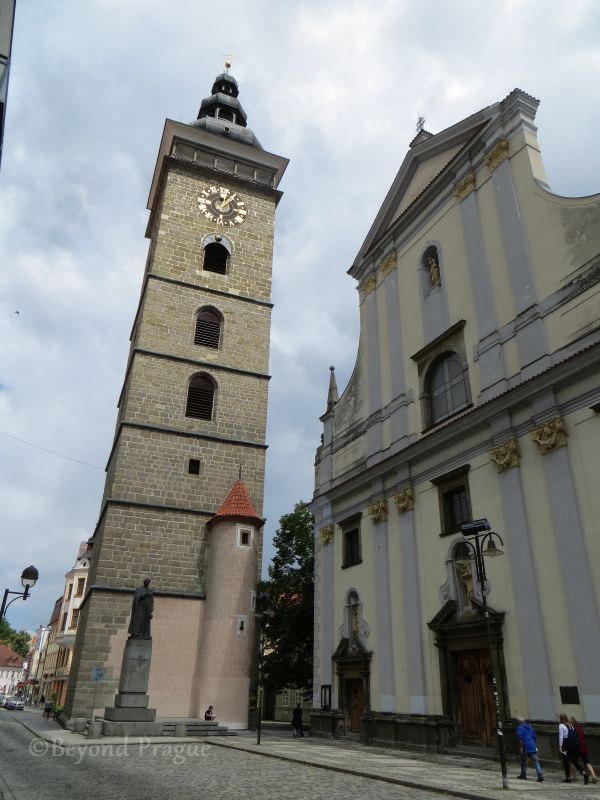
You can enjoy the square and fountain from ground level, or climb the Black Tower, which stands adjacent to the square, for a panoramic view. However, if you’re claustrophobic or not comfortable with a physical climb, you may wish to opt out of the tower ascent.
Other notable attractions in the historic centre include Piarist Square and the St. Nicholas Cathedral. A quick stop at the tourist information centre on the ground floor of City Hall in Přemysl Otakar II Square will provide you with a wealth of further tips on what to see.
If you enjoy good food while travelling, there are many well-reviewed restaurants in the centre offering a variety of cuisines, both traditional Czech and international.
Venturing outside the centre, you can tour the Budweiser Budvar brewery or enjoy sightseeing boat cruises along the Vltava River.
Several cycling routes crisscross the city and its surroundings. This offers a wonderful way for active visitors to discover the area.
Cycling is hugely popular in the Czech Republic, so bicycle rental shops and bike-sharing services are easy to find in a city this size.
As mentioned earlier, České Budějovice makes an excellent jumping-off point for day trips to nearby attractions such as Český Krumlov and Hluboká Chateau. As such, the city offers a range of accommodation options suitable for various travel styles.
A Feel for the Place
Thanks to its status as a working city and university town, České Budějovice feels unpretentious, with a distinctively youthful energy balancing its historic atmosphere.
It’s also an important sports centre, home to professional hockey and football (soccer) teams competing at the national level. The city boasts several venues for other sports as well, giving “Budějce” a lively, active vibe.
Getting there and Learning More
As the regional capital, České Budějovice is easy to reach, well connected by road and rail to other parts of Bohemia.
If you’d like to know more about visiting České Budějovice and the surrounding area, the following websites will help:
- České Budějovice Tourism—The city’s official tourism portal offers a wealth of information on accommodation, transport, and other essentials for travelers.
- VisitCeskeBudejovice.cz—You can also find useful resources on the city’s dedicated page on the VisitBohemia.cz tourism website.
 Beyond Prague