
On the Well-Worn Path
Kutná Hora is well known outside the Czech Republic and ranks among the country’s main tourist draws beyond Prague. As such, it can become quite crowded in high season. Even so, it is well worth visiting—whether as a day-trip from the capital or as a weekend destination in its own right.
The city’s most famous attraction is undoubtedly the bone chapel in the suburb of Sedlec: a collection of human remains arranged decoratively in a macabre yet oddly compelling style.
However, there is much more to this former royal city. For those who like to theme their travels around UNESCO sites, Kutná Hora is an absolute must, as it is home to two UNESCO-listed buildings.
In its heyday, between the 13th and early 17th centuries, Kutná Hora was a wealthy and prestigious settlement. The richness of its silver mines earned it royal status and made it the seat of the Bohemian Royal Mint. At that time, Kutná Hora was second in importance only to Prague within the Bohemian kingdom.
Today, many of the city’s ties to its illustrious past remain intact and now underpin its modern wealth in tourism.

Built on Silver
Silver deposits in the area were known well before the town itself was formally established. Archaeological evidence suggests that surface deposits had been exploited as early as the 10th century.
It was not until 1300, however, that Kutná Hora truly rose to prominence. That year marked the beginning of its ascent to becoming the second most important city in Bohemia, after Prague. Its silver wealth saw it declared a royal city and the seat of the central mint of the Czech lands.
Kutná Hora’s wealth and influence grew steadily from the 13th through the late 16th century. The beginning of the 17th century, however, brought the Thirty Years’ War and a reversal of fortunes. By the war’s end, attempts to reclaim its status faltered, as the silver deposits had been largely exhausted.

With the mines depleted, the mint closed in the late 1720s, and the city entered a period of decline that lasted until the Czech National Revival movement of the late 19th and early 20th centuries brought renewed life.
Without that revival, landmarks such as St. Barbara’s Church and the Italian Court might have been lost, as they had fallen into extreme disrepair throughout much of the 18th century.
Today, visitors can tour the old silver mines and learn about historical techniques of refining ore. A visit to the Italian Court also provides insights into traditional methods of minting coins.
Starting in Sedlec
Kutná Hora has two main tourist areas: Sedlec and the city centre. If you arrive by train, Sedlec will be closer to your point of arrival.
The suburb lies less than a kilometre and a half from the main train station. If you would rather not walk, public buses and a small local train can bring you nearer to the ossuary and other nearby attractions. If you choose the local train, Sedlec is the first stop after the main station and functions as a request stop.
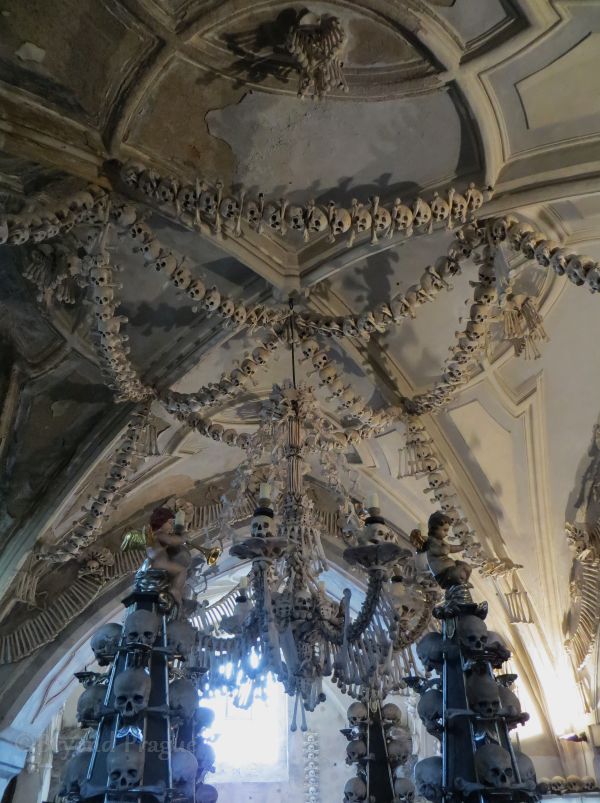
The ossuary is Sedlec’s best-known attraction. Established in the late 1400s and early 1500s, its current appearance dates to 1870. Its popularity means you will likely face a queue to get in. Inside, you will find the artistically arranged bones of some 40,000 people—unique among European ossuaries. It is a spectacular sight, though crowded, so good photographs require patience, and one should not expect a spiritual or meditative atmosphere.
Near the ossuary stands the UNESCO-listed Cathedral of the Assumption of Our Lady and St. John the Baptist, the oldest cathedral in Central Europe. In the same area, you will also find the former Cistercian monastery that once oversaw the Sedlec cemetery and ossuary.

Strolling in the Centre
From Sedlec, you can walk to Kutná Hora’s centre or take the aforementioned buses or local train. The centre is a little over three and a half kilometres from the main station. Buses stop at the edge of the centre, while the train’s next stop after Sedlec will also bring you directly there.
The historic centre is highly walkable and full of architectural treasures. The main focal point is the spectacular St. Barbara’s Church, a UNESCO-listed masterpiece of Late Gothic architecture. Construction began in 1388 but, due to frequent interruptions, was not completed until 1905.
Very close to the church stands the Baroque-style Jesuit College. In front of the college runs Barborská Street, a statue-lined promenade offering a striking view toward the Italian Court and the adjacent Church of St. James, which dates to 1333.

Other highlights include the old stone fountain on Rejsek Square. This elaborate well served as the city’s reservoir from the late 1400s until 1890, when silver mining had compromised underground water supplies. Water was brought from a distant spring through wooden pipes.
As one might expect, the city also has museums dedicated to mining and coinage. The Czech Museum of Silver is spread across three locations in the centre, while the Italian Court houses a museum and interpretive centre devoted to historic minting techniques.
From the 20th century to the present, Kutná Hora has been a city of monuments and tourism. Its historic core and monuments were inscribed on the UNESCO World Heritage List in 1995.

Visiting and Learning More
Kutná Hora offers much more than historic sites, and the city is well prepared to welcome visitors.
Tourist information offices can be found at the main train station, Sedlec, Palacký Square, and St. Barbara’s Church. The city also offers a good selection of accommodation and dining options.
Kutná Hora is a very popular day-trip destination from Prague, and many organized coach tours operate there. If you prefer to travel independently—or simply wish to save some money—the city is also easily reached by rail.
Visit the city’s official website to learn more about everything Kutná Hora has to offer.
 Beyond Prague